
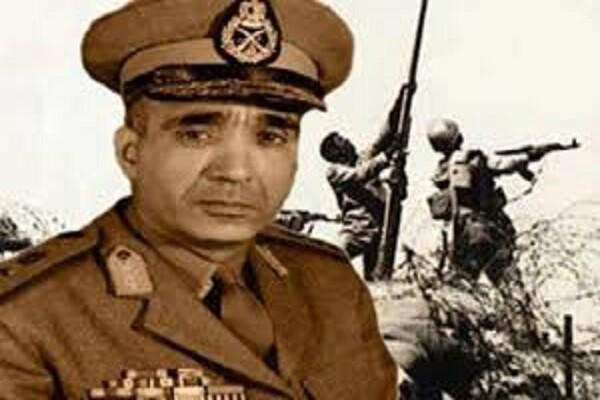
“Always Be Among Your Soldiers in Peacetime and With Them on the Front Lines in Wartime”
(In Commemoration of Egypt’s 6th of October Victory)
There are names in Egypt’s modern military history that shine not merely for their rank or battles fought, but for the principles they embodied. Among them stands Major General Abdel Moneim Riad (1919–1969) — a man revered not only as a commander but as a moral compass for generations of Egyptian soldiers. Known as “The Golden General,” Riad lived and died by a code that defined his life: “Always be among your soldiers in peacetime and with them on the front lines in wartime.”
His legacy transcends military chronicles; it is etched into Egypt’s collective consciousness as a story of intellect, humility, and ultimate sacrifice — one that laid the moral groundwork for the victory Egypt would achieve just four years after his death.
Born in Tanta in 1919, Abdel Moneim Riad rose from modest beginnings to become one of Egypt’s most brilliant military minds. Graduating from the Military Academy, he quickly distinguished himself with his mastery of artillery and strategy. He later attended advanced command schools abroad, where he deepened his understanding of modern warfare and leadership science.
Riad’s career was marked by discipline, intellect, and an unshakable belief that leadership was both a science and a human art. After the 1967 war, Egypt needed both a reformer and a healer — someone who could rebuild not only the army’s capacity but also its spirit. Riad, appointed Chief of Staff of the Egyptian Armed Forces, became that figure. He reorganized training, modernized military operations, and restored a sense of honor and purpose to the troops.
But above all, he rebuilt trust — by leading from the front, by walking among the men he commanded, and by listening more than he spoke. His office, soldiers often said, was as much in the trenches as in Cairo.
On March 9, 1969, at the height of the War of Attrition, Riad visited the Suez Canal front to observe Egyptian artillery fire and assess combat performance. Refusing to rely solely on reports, he chose to inspect the positions himself — standing alongside his men as shells roared overhead.
Moments later, Israeli artillery opened fire on the area. Riad stood firm until shrapnel fatally struck him. He fell exactly where he always said a commander should stand — among his soldiers, not behind them.
His death sent shockwaves across the nation. Cairo’s streets fell silent as the radio announced the loss of a man who had become a symbol of courage, intellect, and selflessness. Yet even in death, Riad became larger than life — his martyrdom transforming into a national rallying cry for resilience and redemption.
Just four years later, in October 1973, the Egyptian Armed Forces achieved the victory that Riad had laid the intellectual and emotional foundation for. Many officers who crossed the Suez Canal that day still invoked his name as they advanced — believing his spirit marched beside them.
Riad’s wisdom remains inscribed in Egypt’s military doctrine. His teachings, both practical and moral, continue to shape officer training today. Among his most famous sayings are:
- “Be a sincere role model for your soldiers.”
- “Never let your men see signs of anxiety or panic in you.”
- “Do not rush into decisions, and once you have decided, do not hesitate.”
- “Do not be traditional or stereotypical; strive for creativity and innovation.”
- “The mistakes of young men can be remedied, but the mistakes of leaders are always great.”
For Riad, leadership was not authority — it was responsibility. His approach rejected arrogance, valued empathy, and demanded intellectual curiosity. He urged commanders to “write down their reflections,” believing that self-awareness was as vital to victory as firepower.
The Arab world mourned Riad not only as a general but as a symbol of integrity. Syrian poet Nizar Qabbani immortalized him in verse, writing:
“If they were slain as you were slain,
If they knew to die as you have died,
They would have offered half the blood you gave.
… O noblest of the slain, upon our eyelids blossomed
The very first step to freedom — it was you who began it.”
Qabbani’s poem captured what Egyptians already felt — that Riad’s death marked the rebirth of Egyptian pride. His blood was not a tragedy; it was a seed from which resilience and victory would grow.
Every year, March 9 is commemorated as Egypt’s Day of the Martyr — a tribute to those who gave their lives for the homeland, with Riad’s name standing foremost among them. Streets, schools, and squares across the nation bear his name, yet his greatest monument remains the ethos he instilled within the Egyptian Armed Forces.
Riad’s life and death remind Egypt that leadership is not about command from afar, but about shared sacrifice, humility, and courage. His code endures as both a lesson and a warning: that the strength of a nation rests not in weapons alone, but in the values of those who wield them.