
(In Commemoration of Egypt’s 6th of October Triumph)
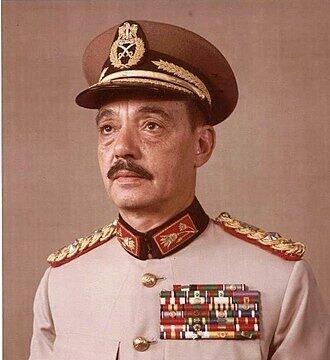
When history remembers the men who turned Egypt’s 1967 heartbreak into the 1973 miracle, one name rises with unshakable distinction — Field Marshal Mohamed Abdel Ghani El-Gamasy (1921–2003), the last to hold the title of Minister of War before the ministry became the Ministry of Defense. Calm, analytical, and impossibly precise, El-Gamasy was not a man of flamboyant words but of quiet, formidable action — a soldier-scholar whose mind charted the maps of victory.
He was the strategist who transformed the Egyptian army from a wounded force into a disciplined machine of resolve and redemption. The October War’s heartbeat pulsed in the meticulous plans he crafted, and his “Notebook of Operations” became both a symbol of brilliance and a blueprint for history.
Born on September 9, 1921, in the Dakahlia governorate, Mohamed Abdel Ghani El-Gamasy’s journey to greatness began in the classrooms of Egypt’s Military Academy. Gifted in mathematics and engineering, he later became one of the Arab world’s foremost experts in armored warfare. His reputation spread beyond borders — he was often referred to by fellow officers as “the engineer of battle” for his unmatched mastery of tactics and logistics.
El-Gamasy’s career advanced steadily through dedication and intellect. He served as Chief of Operations during the October 1973 War, then as Chief of Staff of the Armed Forces, and later as Commander-in-Chief and Minister of War. Each role carried an escalating weight of responsibility, but he bore them with the same quiet precision that defined his character.
Those who worked under him described a man of few words and immense authority — one whose silence carried more command than speeches. “He was not one for drama,” a fellow officer once said, “but when El-Gamasy spoke, every word was a strategy.”
In the tense months preceding the 1973 War, while others speculated on timing and feasibility, El-Gamasy was writing — line by line, page by page — what became known as “El-Gamasy’s Notebook.” This handwritten journal, kept in absolute secrecy, contained the full operational framework of the crossing of the Suez Canal, the deception tactics, the timing, and the coordination between air, ground, and anti-air units.
He guarded it personally, carrying it with him through every planning session until the decisive Burj Al-Arab meeting, where he presented it to Field Marshal Ahmed Ismail Ali and President Anwar Sadat. It was in that meeting that the final date and strategy of the October 6, 1973 War were confirmed — the war that would restore Egypt’s pride and alter the balance of power in the Middle East.
El-Gamasy’s composure under pressure made him both revered by his soldiers and feared by his enemies. Israeli intelligence referred to him as “the man we fear more than any other Egyptian commander.” Former Israeli Prime Minister Golda Meir went further, calling him “the scary thing general.”
His demeanor — lean, calm, unreadable — earned him another nickname: “the frighteningly quiet general.” Yet his quietness concealed the confidence of a man who knew exactly when and how to strike. His war plans left Israeli analysts stunned for their precision and timing. The surprise crossing on October 6th, achieved in under six hours, remains one of the most studied military operations in global warfare academies — and much of its conceptual brilliance traces directly to El-Gamasy’s mind.
Unlike many of his contemporaries, El-Gamasy did not seek glory. His satisfaction came from structure, performance, and results. To him, war was not chaos but calculation; victory was not spectacle but order. Those who served under him spoke of his relentless insistence on detail — the right bridge, the right time, the right maneuver — and his deep empathy for the soldiers executing them.
He believed in quiet strength, in intelligence as the first weapon, and in the idea that Egypt’s military greatness rested on discipline and self-belief. His leadership represented the intellectual spine of Egypt’s comeback — transforming lessons from defeat into the architecture of triumph.
After the war, Field Marshal El-Gamasy became Egypt’s Minister of War, serving with dignity and foresight until the ministry was restructured into the Ministry of Defense. He remained an influential voice in military thought and national security, publishing reflections that emphasized rational strategy and national unity.
He passed away on June 7, 2003, leaving behind not just a record of victory but a moral and intellectual legacy — one rooted in humility, patience, and unwavering devotion to Egypt. Even in retirement, he was revered as the man whose silence spoke the language of victory.
Today, when Egyptians commemorate the 6th of October Victory, they recall not only the heroism on the battlefield but also the disciplined genius behind the maps and orders that made it possible. El-Gamasy’s calm presence, his unflinching precision, and his total faith in Egypt’s destiny continue to inspire officers and citizens alike.
He embodied a philosophy that leadership is not about emotion, but about vision, preparation, and resolve. His life stands as proof that wars are won not just by courage on the front lines, but by brilliance in the mind of the commander.