
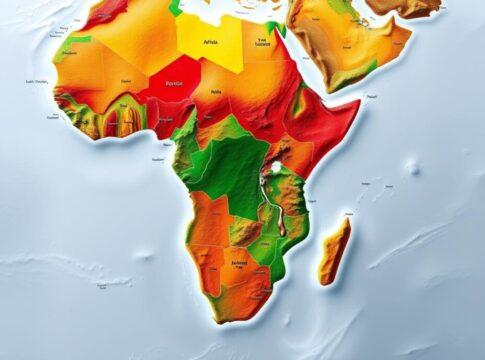
Africa is rewriting its economic playbook. With Western aid flows declining and global powers turning inward, governments are moving away from dependency and building resilience on their own terms. This shift is visible in mining, industrialisation, trade, and finance — and it is reshaping how international partners engage with the continent.
Resource-rich countries are pushing for local processing. Ghana and Ivory Coast, long dependent on cocoa exports, are now investing in local chocolate factories. The Democratic Republic of Congo has restricted raw cobalt exports, encouraging investors to build refining and battery plants on the ground. Similarly, Zambia is expanding copper processing, while Nigeria is developing petrochemical capacity to capture more value from oil and gas.
Industrialisation strategies are also evolving. Instead of focusing only on exports to Europe and the US, African nations are harnessing the African Continental Free Trade Area (AfCFTA) to boost intra-African commerce. Kenya is positioning itself as a logistics hub for East Africa, with modern ports and trade corridors connecting landlocked neighbours. Egypt is leveraging AfCFTA and its Suez Canal Economic Zone to attract green hydrogen projects and regional manufacturing.
Financing models are changing too. With aid contributions shrinking, governments are tapping local pension funds, issuing bonds, and deregulating markets to mobilise domestic capital. Rwanda and South Africa are leading with reforms that deepen local capital markets, while Ghana has tapped diaspora bonds to finance infrastructure. Across the continent, blended finance — combining private, local, and multilateral funding — is becoming the norm.
Africa is no longer a passive player but an active architect of its economic future. For international partners, the winning formula lies in becoming true collaborators in Africa’s value chains — investing in local industries, transferring knowledge, and sharing in long-term growth — rather than remaining mere buyers or donors. Those who adapt swiftly will not only secure early access to one of the fastest-growing and most resilient markets globally, but will also position themselves at the heart of a continent rich in resources, talent, and innovation. In Africa’s new economic era, the lands of opportunity are wide open for growth, expansion, and enduring partnerships.