
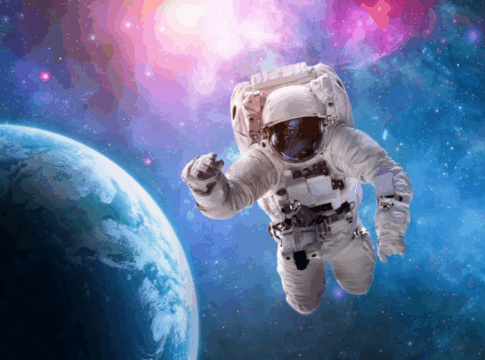
With NASA’s preparations for Artemis Moon missions well underway and Mars missions on the horizon, a crucial challenge persists: ensuring reliable medical care when Earth is far away—or unreachable in real time. NASA and Google have teamed up to tackle this with an innovative solution: the Crew Medical Officer Digital Assistant (CMO‑DA), an AI-powered medical assistant designed for deep-space missions.
CMO‑DA is an AI clinical decision support system, built atop Google Cloud’s Vertex AI platform, employing natural language processing, machine learning, and a multimodal interface—allowing users to interact via speech, text, and images. It’s tailored for environments where there may be no live physician available or communication delays make real-time consultation impossible.
In initial experiments simulating medical scenarios—such as ankle injuries, flank pain, and earaches—a team of doctors and an astronaut evaluated the assistant’s diagnoses via the Objective Structured Clinical Examination (OSCE) methodology. Results were promising: approximately 88% accuracy for ankle injuries, 80% for ear pain, and 74% for flank pain.
Communication delays in space are not hypothetical. A round-trip radio delay to Mars can stretch to 44 minutes. Waiting for Earth-based advice during a medical emergency is simply not an option. CMO‑DA offers an autonomous healthcare safety net, empowering astronauts—and designated medical officers—to make informed decisions swiftly.
David Cruley, Google Cloud’s public sector engineer, emphasized the model is now being refined in close consultation with medical professionals to enhance accuracy and safety.
CMO‑DA’s implications extend well beyond space. The partnership between NASA and Google sees promise in extending similar medical AI to remote or disaster-affected areas on Earth. These places often lack access to doctors, yet CMO‑DA’s ability to guide diagnosis and treatment could fill critical healthcare gaps.
“We see holds promise for remote clinics and even during disaster response,” says Dr. José Morey—a physician known informally as the “Intergalactic Doctor”, who has contributed to NASA’s innovation efforts. He emphasizes the need to merge technological tools with responsible oversight.
Dr. Lara Simmons, a former NASA flight surgeon, notes: “An AI support system like this could bridge life-or-death moments when Earth is silent. But it must always serve as a guide for trained personnel—not a blind substitute.”
Meanwhile, Emily Chen, a health-tech strategist, says: “The clinical accuracies are encouraging—but real test will be in field-equivalent simulations and multi-system integration with wearable sensors.”
Standard astronaut healthcare on the ISS relies on ground support, near-instant communication, and evacuation capabilities. For lunar and planetary missions, those pillars vanish. CMO-DA delivers autonomous medical decision-making, reducing risks and transforming mission safety envelopes.
The technology reflects NASA and Google’s collaboration on actionable AI—combining deep learning with extreme operational contexts. For healthcare on Earth, especially in underserved regions, it marks a potential shift in delivering medical guidance where real doctors cannot reach.