
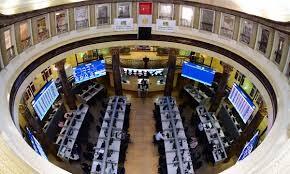
Egypt’s benchmark EGX30 closed modestly lower on last Thursday, August 21, as regional caution and subdued trading weighed down sentiment. The index fell 0.31% to 35,622.26 points, marking its third consecutive session in the red. (Reuters; Business Today Egypt)
Other indexes painted a mixed picture:
- EGX33 Shariah dipped 0.05% to 3,586.04
- EGX35-LV remained flat at 3,801.48
- EGX70 (SMEs) dropped 0.23% to 10,668.53
- EGX100 declined 0.29% to close at 14,282.45
(Arab Finance, Amwal Al Ghad)
Total turnover stood at EGP 3.54 billion, about 24% below the 90-day average, with 911.9 million shares exchanged. Market capitalization remained near EGP 2.483 trillion. (EFG Hermes, Business Today Egypt)
Investor Flows & Sector Highlights
Local retail investors emerged as net buyers with EGP 58.2 million, while Arab and foreign investors were net sellers to the tune of EGP 12.5 million and EGP 45.7 million, respectively. Retail dominated 79% of trades, compared to 21% institutional. (EFG Hermes)
Top gainers on the day included:
- October Pharma (+20%) to EGP 203.73
- El Arabia for Land Reclamation (+20%) to EGP 184.47
- Egyptian Gulf Marseilia (Real Estate) (+12.47%) at EGP 4.51
(Amwal Al Ghad)
On the flip side, notable losers were:
- Egyptians Real Estate Fund (−9.23% to EGP 13.97)
- Sinai Cement (−7.57% to EGP 52.50)
- Delta for Printing & Packaging (−6.32% to EGP 94.79)
(Amwal Al Ghad)
Regional Backdrop & Expert Commentary
The performance aligns with mixed regional markets, notably prior to the U.S. Fed Chair’s speech at Jackson Hole—gearing investors to anticipate monetary policy shifts. Gulf markets closed varied, while EGX30 edged lower driven by caution in sectors like finance and cement. (Reuters)
Hani Abuagla, Senior Analyst at XTB MENA, observed:
“Regions are consolidating ahead of U.S. rate cues. For Egypt, defending levels near 35,600 should be critical for sentiment stability.”
What This Means for Egypt’s Economy
- Trading calm amid volatility: The subdued pace suggests investors are awaiting clarity on U.S. rates and domestic credit flows.
- Retail as a stabilizer: Local investors’ buying spurred slight market support—a positive sign of domestic confidence.
- Diverging sectors: Gains in pharma and land reclaimers contrast with weakness in real estate funds and construction—reflecting divergent economic pressures.