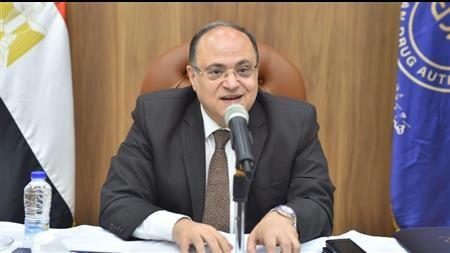
Egypt has reached a remarkable milestone in pharmaceutical independence, now locally producing 91% of medicines used by the domestic market, a feat confirmed by Dr. Ali Al-Ghamrawy, Chairman of the Egyptian Drug Authority (EDA). This achievement, underlain by strategic investments in raw materials and production lines, has led to a dramatic 98% reduction in medicine shortages, substantially fortifying both public health and national security.
El-Ghamrawy highlighted the robust industrial infrastructure now underpinning Egypt’s pharmaceutical ecosystem. This includes around 179 factories, of which 11 hold international accreditations, plus over 986 medicine production lines, along with facilities for medical supplies, raw materials, biological products, and cosmetics. Egypt has also expanded its strategic stock of raw materials from three to six months, adding resilience against import disruption
“Securing our pharmaceutical supply chain isn’t just about economics—it’s a strategic imperative,” Dr. Al-Ghamrawy remarked at a press conference reported by Sada El-Balad/TV BRICS.
Beyond domestic resilience, Egypt is emerging as a continental pharma powerhouse—accounting for 27% of Africa’s total pharmaceutical market. The EDA aims for $3 billion in pharmaceutical exports by 2030, a goal supported by investments in manufacturing infrastructure and technology partnerships, including 179 local manufacturing plants and strategic stockpiles of raw materials.
It is to be noted that, Drug exports rose 65.6% to $447 million between 2019 and 2024, now reaching over 147 global markets, including Europe and the Middle East.
Egypt has emerged as the first African country to reach the World Health Organization’s Maturity Level 3 in regulating medicines and vaccines, a milestone that enhances global trust and opens doors to international markets. To further streamline operations, the EDA plans to launch electronic labeling, track-and-trace systems, and the electronic Common Technical Document (eCTD) framework, positioning Egypt alongside the most advanced pharmaceutical regulators worldwide. A key private sector collaboration includes a recent strategy meeting with global firm Abbott to guide localization of critical medication production, focusing on technology transfers and pricing strategies.
Egypt’s pharmaceutical market witnessed a formidable boom—where multiple companies generated a staggering EGP 23.7 billion in sales, testifying to the sector’s vitality, some of which are listed below;
1. GSK Egypt led the field with EGP 3.72 billion in Q1 sales, marking its dominance in value sales. Crucially, the company swung back to profitability, posting a net profit of EGP 59.1 million—transforming a prior-year loss into fiscal strength.
2. Sanofi Egypt trailed closely with around EGP 3.06 billion in sales, consolidating its spot as a major wave-maker in Egypt’s health ecosystem.
3. Pharco Pharmaceuticals delivered sales of approximately EGP 2.99 billion in Q1, in addition to demonstrating blistering growth. Notably, between May 2024 and April 2025, Pharco clocked sales of USD 244 million (roughly EGP 7 billion), reflecting an impressive 58.8% annual increase.
4. Amoun Pharmaceutical retained its position among Egypt’s industrial titans, achieving about EGP 2.47 billion in sales during Q1—a robust indicator of sustained demand and output.
5. Novartis Egypt contributed EGP 1.87 billion in Q1 sales—a steady output underscoring its strategic role in the local generics and branded medicines landscape.
6. EIPICO (Egyptian International Pharmaceutical Industries Co.) generated EGP 1.80 billion in Q1. As one of the few biopharmaceutical-capable companies domestically, it exports to 74 countries and spans over 400 products across 25 therapeutic groups.
7. Marcyrl posted EGP 1.72 billion in Q1 revenue, reinforcing its standing as a trusted supplier across a wide therapeutic range.
8. Apex Pharma S.A.E. secured approximately EGP 1.68 billion in sales, cementing its place among Egypt’s top multi-product national producers.
9. Biomed not only delivered EGP 1.64 billion in Q1 sales but also stood out with an astonishing growth rate—over 312.9% year-over-year—highlighting it as one of the year’s breakout performers.
10. EVA Pharma, with EGP 1.54 billion in Q1 sales, remains a forward-looking innovator. The company is playing a pivotal role in future therapies, including a licensing agreement with Eli Lilly to produce arthritis drug Olumiant locally for distribution to 49 African countries by 2026.
11. Alexandria Pharmaceuticals (affiliated with the Drug Holding Company) saw a remarkable 66.5% jump in net profit during Q1 FY 2024/25, posting EGP 98.5 million—a clear sign of strong operational momentum. Revenue reached EGP 768 million, up 57.5% YoY.
12. Rameda (Tenth of Ramadan Pharmaceuticals) posted a 44.3% increase in net profit, with consolidated revenues soaring to EGP 865.6 million in Q1 2025—up from EGP 456.2 million the prior year.
13. October Pharma also posted solid performance, achieving a 14.2% rise in net profits (EGP 57.3 million) and a lift in sales to EGP 386.1 million during Q1.
Dr. Ali Auf, head of the pharmaceutical division at the Federation of Egyptian Chambers of Commerce, emphasizes: “With local production expanding in oncology, hormonal, and biologic drugs, Egypt is not only saving foreign currency—it’s securing health sovereignty.” He attributes the surge to coordinated regulatory and industrial policy.
The fiscal 2024/2025 national budget saw healthcare funding jump 24.9% to EGP 496 billion, with drug programs alone receiving a 16.1% boost to EGP 10.1 billion, underscoring substantial policymaker support for pharmaceutical expansion.