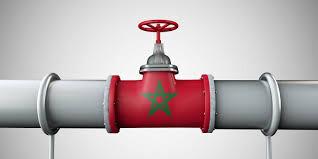
Morocco is poised to embark on a $700 million project to construct pipelines that will seamlessly integrate its upcoming liquefied natural gas (LNG) terminal in the Mediterranean city of Nador with key pipelines and industrial zones in the country. This ambitious project, spearheaded by Leila Benali, Minister of Energy Transition and Sustainable Development, aims to enhance Morocco’s energy infrastructure and strengthen its position as a pivotal energy hub in the region.
Speaking to parliament, Minister Benali highlighted the project’s strategic importance, noting its potential to link Nador’s planned terminal to the existing pipeline network connecting Morocco to Spain, and further extending to industrial zones in Mohammedia and Kenitra. “The cost of the project to build a pipeline network to connect the terminal in Nador to the Morocco-Europe pipeline and those two industrial cities is expected to exceed $700 million,” she stated.
To attract the best partners for this endeavor, the Ministry has submitted an expression of interest for the terminal project, with a deadline for company responses set for 23 July. This presents a vital opportunity for global energy companies to engage in Morocco’s evolving energy landscape, a region increasingly pivotal for LNG transit between Europe and Africa.
Industry analysts are closely watching Morocco’s energy strategy, with particular interest in how this project will integrate with broader European energy networks. Dr. Ahmed Al-Fassi, an energy policy expert, commented, “Morocco’s investment in LNG infrastructure is a forward-thinking strategy that not only addresses domestic energy needs but also positions the country as a critical energy corridor between continents.”
For companies interested in participating in this landmark project, the tender process presents a unique opportunity to be part of a transformative phase in Morocco’s energy industry. Eligible companies must demonstrate expertise in LNG infrastructure and align with Morocco’s sustainable development goals. Prospective bidders should prepare comprehensive proposals that address technical and environmental considerations, with the Ministry expecting implementation to begin shortly after the tender process concludes.
Sources close to the Ministry indicate that several major international energy firms have already expressed keen interest in the project, underscoring its global significance. Moreover, discussions hint at potential collaborations with regional stakeholders to ensure the project’s success and sustainability.