
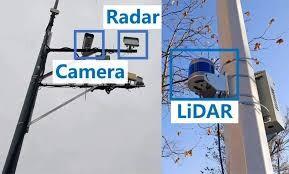
For many Egyptian families, the monthly budget now includes an unusual expense: speeding fines. The rapid expansion of radar systems across Cairo, Alexandria, and major highways is catching thousands of drivers every day, with many parents and professional drivers saying the penalties are becoming almost as routine as rent or school fees.
Authorities argue the rollout of advanced radar networks is saving lives by curbing reckless speeding. But for many households, the growing number of fines feels like punishment without education.
Traffic safety experts say the technology is desperately needed. Egypt’s roads remain among the most dangerous in the region. According to the Central Agency for Public Mobilization and Statistics (CAPMAS), road accidents claimed over 7,000 lives in 2023, with speed identified as the leading cause. “Driving 40 km/h in a residential street is like falling from the fifth floor—it’s often fatal for pedestrians,” explained Dr. Ahmed El-Sayed, a road safety researcher at Ain Shams University. “Radar enforcement forces drivers to respect limits that save lives, especially near schools and markets.” Globally, studies show that reducing impact speed from 40 km/h to 20 km/h increases a pedestrian’s chance of survival from near zero to almost certain. In Egypt, where cars often barrel down neighborhood streets, radar-enforced limits could mean the difference between life and death.
But for many Egyptians, especially working parents and professional drivers, the costs are hitting hard. Mahmoud Hassan, a father of three from Giza, said he now spends nearly EGP 2,000 a month on speeding fines, mostly for minor infractions. “It’s like paying another utility bill,” Mahmoud told Al-Ahram Weekly. “I understand safety is important, but sometimes the radar catches you at 65 in a 60 zone. We need fairness, not just punishment.” Taxi and ride-hailing drivers share similar frustrations. “We can’t afford to lose time on the road, but we also can’t keep paying these fines. It feels like the radars are for revenue more than safety,” said Ola Ibrahim, an Uber driver in Cairo.
While Egyptians debate the fairness of widespread radars, New York has been piloting a more direct solution to speeding: Intelligent Speed Assistance (ISA). This technology, already tested on 500 municipal fleet vehicles, uses GPS and traffic sign recognition to automatically prevent cars from exceeding the legal speed limit. The results were striking: according to the New York City Department of Transportation, speeding in the test vehicles dropped by 82% on highways and 64% overall. Lawmakers in the U.S. are now considering legislation requiring repeat traffic offenders to install ISA systems that cap their speed to just 5 mph (about 8 km/h) over the posted limit. The system works quietly in the background—when a driver tries to accelerate beyond the legal threshold, the car simply won’t respond. Unlike a radar fine that punishes after the fact, ISA prevents the violation in the first place.
The debate strikes at the heart of a challenge: how to build safer roads without pushing families into financial distress. Advocates argue for combining enforcement with public awareness campaigns and graduated penalties for minor violations.
“Radars save lives, but drivers must see them as protectors, not tax collectors,” said Eng. Laila Mostafa, an urban mobility consultant. “Egypt could learn from international pilots like New York’s ISA, where technology physically stops dangerous behavior before it happens.”
For now, the radar expansion continues, and so do the debates in Egyptian households. Parents calculate tickets alongside groceries, while authorities insist lives are being saved. The question remains: can Egypt find a balance where safety doesn’t come at the cost of household survival?
