
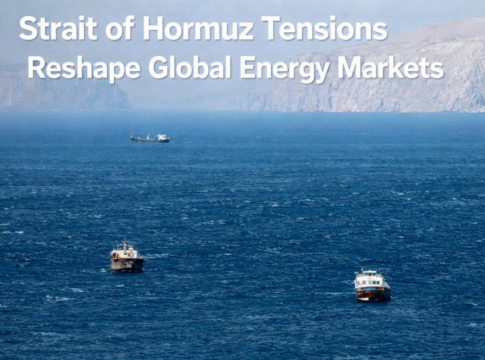
Escalating tensions in the Middle East and the potential closure of the Strait of Hormuz could force Asian refineries to cut crude processing by as much as 6mn barrels per day (b/d) in April 2026, according to new analysis by energy consultancy Wood Mackenzie, highlighting the scale of the region’s exposure to Gulf supply disruptions.
Such a scenario would represent a major shock for the world’s largest refining hub. Asia currently sources roughly 65% of its crude imports from the Middle East, with Saudi Arabia, Iraq and the United Arab Emirates acting as the region’s primary suppliers. Analysts say this heavy dependence leaves Asian energy markets particularly vulnerable to geopolitical disruption.
India is expected to face the most acute pressure. According to Sushant Gupta, Research Director for Asia Pacific Refining and Oils at Wood Mackenzie, India’s reliance on Middle Eastern crude would exceed 80% of total imports in the absence of Russian supplies, and remains near 50% even with current Russian volumes maintained.
India also holds relatively limited emergency crude inventories compared with several Asian peers. As a result, Indian refiners may need to reduce utilisation rates by about 12%, cutting crude processing by roughly 600,000 b/d as they scramble to replace lost Middle Eastern barrels.
Alternative supply options remain constrained. Analysts note that China and India are increasingly competing for Russian crude, while other replacement sources remain limited in both logistics and compatible crude quality.
Wood Mackenzie expects Asian refiners initially to rely on commercial inventories and operational buffer stocks, which typically cover around two weeks of demand. If disruptions persist, governments could be forced to draw on strategic petroleum reserves (SPRs), although the timing and scale of such releases remain uncertain.
Under a scenario in which emergency inventories are accessible, the consultancy estimates the following potential refinery run reductions for April:
- China: about 750,000 b/d (roughly a 4% utilisation decline)
- India: around 400,000 b/d (about an 8% decline)
- South Korea: roughly 300,000 b/d as refiners prioritise domestic supply
- Japan: smaller reductions, supported by relatively strong stock levels
The supply disruption is also expected to reshape regional fuel trade flows. Wood Mackenzie estimates that Asian gasoline exports could fall by roughly 750,000 b/d month-on-month, while diesel and gasoil shipments may decline by about 860,000 b/d. Jet fuel exports are projected to drop by around 100,000 b/d.
Governments are increasingly prioritising domestic supply security. According to Priti Mehta, Senior Research Analyst at Wood Mackenzie, China has already instructed refiners to halt gasoline and diesel exports in order to strengthen local inventories. Meanwhile refiners in India, Japan and South Korea have become reluctant to issue export tenders amid the uncertain geopolitical outlook.
Energy analysts say strategic petroleum reserves could become a crucial stabilising buffer if shipping through the Strait of Hormuz remains disrupted.
Xinxin Bi, Senior Research Analyst at Wood Mackenzie, noted that China’s large crude inventories accumulated in recent years could help cushion the impact on its refining sector if released to the market. Japan and South Korea, however, may need to rely more heavily on their strategic reserves due to their high dependence on Middle Eastern supplies.
Even so, sustained disruption to Gulf shipping lanes would likely tighten global refined-products markets, increasing price volatility and exposing structural vulnerabilities in Asia’s energy supply chains.
With the conflict entering its third week by 16 March, following the escalation that began on 28 February, the crisis has increasingly shifted from a regional security concern to a broader global macroeconomic risk.
Brent crude has climbed above $100 per barrel, while the International Energy Agency (IEA) has warned that the disruption represents one of the most severe supply shocks the oil market has faced in decades. Roughly 15mn barrels per day of crude flows — together with significant volumes of Gulf LNG — remain at risk or partially constrained.
The effects are already spreading beyond the oil market. Europe faces rising natural-gas costs, Asian refineries are cutting throughput and conserving fuel supplies, and global industrial supply chains — including pharmaceuticals, semiconductors and fertilisers — are beginning to feel the strain.
Economists warn that the combination of higher energy prices and slowing economic activity could revive stagflationary pressures across several major importing economies.
At the same time, the disruption is reshaping global energy trade patterns. Producers with export routes outside the Gulf — including the United States, Brazil, Norway and several West African suppliers — could gain market share, while Russia may strengthen its role as an alternative supplier to Asian buyers seeking crude that bypasses the Hormuz corridor.
Commodity trading houses, tanker operators and LNG exporters are also likely beneficiaries as price spreads widen and freight rates climb.
Industry observers say Washington has explored options to ease restrictions on certain Russian crude flows to stabilise supply, while developers of projects such as Alaska LNG report renewed interest from Asian buyers seeking long-term supply sources that avoid Gulf shipping routes.
For energy-importing economies across Asia and Europe, however, the crisis highlights a deeper structural shift: energy security — not simply price — is emerging as one of the defining challenges of the global oil market in 2026.
The crisis around Hormuz is rapidly becoming more than an oil story. It is a reminder that the arteries of global trade remain vulnerable to geopolitical shocks capable of reshaping markets overnight. If the conflict persists, the economic consequences may extend far beyond energy — touching inflation, industry and growth across the global economy.