
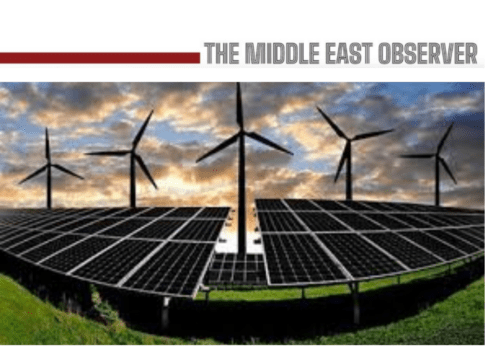
Africa’s renewable energy transition gained further momentum in 2025, with the continent recording economic growth of 3.9 percent and a marked acceleration in solar power deployment, according to data released by Egypt’s Information and Decision Support Center (IDSC). The report indicates that the continent’s top ten solar markets accounted for nearly 90 percent of newly installed solar capacity during the year, collectively adding approximately 4.5 gigawatts (GW) as part of a broader objective to reach 300 GW of renewable energy capacity by 2030.
South Africa led continental additions with roughly 1.6 GW of new solar capacity, followed by Nigeria with 803 megawatts (MW), Egypt with 500 MW, and Algeria with 400 MW. Projections cited in the report suggest that Africa could add an additional 31.5 GW of solar capacity by 2029, reinforcing the continent’s strategic shift toward diversified and lower-carbon energy sources.
Within this broader regional context, Egypt has positioned the energy sector as a central pillar of its updated economic development strategy. The government’s medium-term framework targets raising real GDP growth to 7.5 percent by 2030 while creating approximately 1.5 million new jobs, with energy expansion and infrastructure modernization identified as key enabling factors.
Grid enhancement has emerged as a national priority amid rising electricity demand. Authorities are targeting an electricity sector output of EGP 655.6 billion in fiscal year 2025/2026, expanding nationwide electricity coverage to 99.8 percent, and increasing annual generation capacity to 235 billion kilowatt-hours (kWh), up from 229 billion kWh recorded two years earlier.
In parallel, the government has outlined measures to safeguard supply reliability ahead of peak summer demand in 2026. Plans include the addition of 3,000 MW of new solar generation capacity alongside 600 MW of battery storage capacity before the summer season, raising total installed battery storage to approximately 1,100 MW. These measures are designed to strengthen grid stability, support renewable integration, and ensure uninterrupted electricity delivery.
The developments underscore a dual trajectory: accelerated renewable deployment across Africa and intensified infrastructure investment within Egypt to support economic expansion, energy security, and long-term sustainability objectives.