
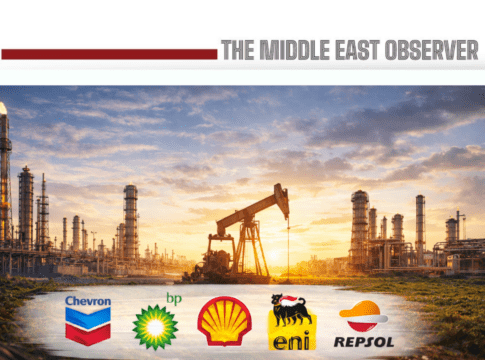
The U.S. Treasury Department’s Office of Foreign Assets Control (OFAC) has issued new general licenses allowing several major international energy companies to resume oil and gas operations in Venezuela, in one of the most significant adjustments to U.S. sanctions policy on the country’s energy sector in years. The move follows sweeping legal reforms in Venezuela’s oil industry and a broader policy push by the U.S. aimed at reviving the country’s oil-dependent economy.
Under the newly issued licenses, energy giants including Chevron, BP, Eni, Repsol and Shell are authorized to engage in oil and gas exploration, production-related activities, and contractual negotiations with Venezuela’s state oil company, Petróleos de Venezuela (PDVSA). The authorizations represent the broadest sanctions relief to date for foreign energy investors, enabling firms to resume operations that have been constrained since U.S. sanctions tightened in 2019.
The framework requires that royalty and tax payments to Venezuela be processed through a U.S.-controlled foreign government deposit fund to ensure regulatory compliance, and continues to bar involvement by companies owned or controlled by entities from Russia, China and Iran. A second general license permits negotiation of new investment contracts with PDVSA, although final agreements will still require separate OFAC approvals.
In a parallel development, India’s Reliance Industries has reportedly received a U.S. license allowing it to directly purchase Venezuelan crude, offering New Delhi’s refiners an alternative to discounted Russian oil amid shifting global trade dynamics.
The licensing changes come amid broader U.S. engagement with Venezuela’s energy sector, including a recent visit to Caracas by U.S. Energy Secretary Chris Wright to assess the industry overhaul and promote foreign investment in upstream and gas projects.
Venezuela’s crude production currently stands a little over 1 million barrels per day, substantially below historic peaks of more than 3 million bpd, reflecting years of underinvestment and sanctions-driven decline. The new licensing regime is expected to help stabilize exports and logistics in the near term, with analysts projecting a modest increase toward roughly 1.1–1.2 million bpd if operational and export conditions improve.
Over the medium term, improved access for oilfield services and incremental field redevelopment could lift production further, but a *broader rebound — including major expansions and greenfield investment — is likely to unfold over multiple years, contingent on sustained legal certainty, regulatory transparency and capital commitment.
For global oil markets, the immediate impact is expected to be moderate, as Venezuelan volumes remain relatively limited. However, restoration of Venezuelan crude — especially heavy grades suited to Gulf Coast and regional refiners — could diversify supply flows and ease regional tightness.
Taken together, the licensing changes and renewed diplomatic engagement signal a major geopolitical recalibration that could gradually reintegrate Venezuela’s vast hydrocarbon resources into global markets, while reinforcing the role of Western energy firms in the country’s mid- to long-term production roadmap.