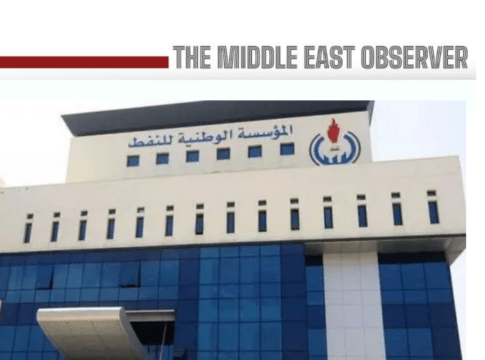
Libya has formally reopened its upstream hydrocarbons sector, awarding a series of oil and gas exploration blocks to international energy companies in its first competitive licensing round since 2007. The results were announced by the National Oil Corporation (NOC), marking a strategic effort to revive exploration activity, restore investor confidence and lay the groundwork for long-term production growth despite ongoing political and operational risks.
Among the headline awards, Offshore Area 01 in the Sirte Basin was granted to a consortium comprising Eni as operator with a 60% participating interest and QatarEnergy holding the remaining 40%. The block, spanning approximately 29,000 square kilometers in water depths reaching up to 2,000 meters, represents QatarEnergy’s first upstream entry into Libya and reinforces Eni’s longstanding presence in the country. Deepwater exploration programs of this scale typically involve a 3–5 year exploration phase covering seismic acquisition and exploratory drilling, followed—if commercial discoveries are made—by an appraisal and development period extending another four to seven years, placing potential first production in the early-to-mid 2030s.
A separate offshore award, Area 07, was secured by a consortium including Repsol, MOL Group and Turkish Petroleum. The award underscores Libya’s strategy of diversifying its investor base across European and regional players while accelerating offshore gas and oil exploration in the Mediterranean. Similar to Area 01, exploration commitments are expected to span several years before any development decisions are taken.
Onshore, U.S. major Chevron secured the Sirte S4 exploration license, signaling a notable return to Libya’s most prolific oil-producing basin. The Sirte Basin has historically accounted for the majority of Libya’s crude output and benefits from established infrastructure, potentially allowing for shorter development cycles if discoveries are made near existing facilities. Exploration drilling in such onshore blocks typically unfolds over two to four years, with possible production timelines emerging toward the late 2020s or early 2030s.
In the southern Murzuq Basin, the M1 exploration license was awarded to Aiteo, marking a rare expansion by an African independent into Libya’s upstream sector. The Murzuq Basin remains underdeveloped compared to Sirte but is considered geologically prospective. Exploration programs are expected to run for three to four years, with development contingent on both commercial viability and improvements in regional infrastructure and stability.
Collectively, the awards constitute Libya’s first competitive upstream licensing initiative in nearly two decades and form a cornerstone of its strategy to lift crude production beyond current levels of approximately 1.2 million barrels per day. The projects are expected to attract significant phased capital investment over the coming decade; however, the realization of measurable production gains will ultimately hinge on successful exploration outcomes, regulatory continuity, and a stable fiscal framework. While structural risks persist—including governance fragmentation, localized security sensitivities, and infrastructure constraints—the participation of major international and regional operators reflects renewed institutional confidence in Libya’s long-term hydrocarbon prospects.
Should political stability and security conditions consolidate in parallel with sustained policy coherence, the newly awarded blocks could materially contribute to repositioning Libya as a leading Mediterranean energy supplier over the next decade.