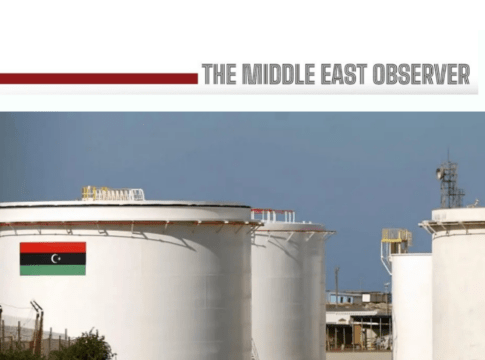
Libya has unveiled a sweeping package of energy agreements aimed at revitalising its oil and gas sector, anchored by a long-term investment deal worth more than $20 billion with major international energy companies, alongside a parallel cooperation framework with Egypt focused on sector support services.
Speaking at the opening of the Libya Energy and Economic Summit in Tripoli, Prime Minister Abdulhamid Dbeibah announced a 25-year agreement with TotalEnergies and ConocoPhillips, aimed at expanding Libya’s oil production capacity by up to 850,000 barrels per day. The project, implemented through the Waha Oil Company, is fully financed by foreign partners and is expected to generate more than $370 billion in revenues over its lifetime.
Dbeibah said the agreement represents one of the largest energy investments in Libya in decades and signals renewed international confidence in the country’s hydrocarbon potential, despite years of political fragmentation and production disruptions.
Alongside the investment deal, Libya also signed a memorandum of understanding with Egypt’s Ministry of Petroleum and Mineral Resources, underscoring Cairo’s growing role as a regional energy partner. The cooperation framework focuses on technical, operational, and institutional support services for Libya’s energy sector, including expertise in exploration and production, field development planning, workforce training, and regulatory coordination.
Egypt’s role is expected to centre on transferring practical know-how accumulated across its mature oil and gas industry, supporting capacity building within Libya’s national institutions, and providing advisory input on licensing, tendering, and investment frameworks. The cooperation also opens the door to collaboration in midstream and downstream services, including logistics, refining optimisation, and infrastructure maintenance.
In parallel, Dbeibah confirmed that Libya is preparing additional agreements, including a planned deal with Chevron covering exploration and production development, as part of a broader effort to draw global energy majors back to the Libyan market.
The summit was attended by senior regional and international officials, including Massad Boulos, who described the event as an opportunity to reposition Libya as a strategic economic partner and a potential gateway for deeper energy cooperation with the United States.
Libya currently produces around 1.4–1.5 million barrels per day and holds Africa’s largest proven oil reserves, estimated at 48.4 billion barrels. However, its energy sector has been repeatedly disrupted since 2011 by security challenges and institutional division between the UN-recognised government in Tripoli and rival authorities in the east.
National Oil Corporation chairman Masoud Suleman said a new licensing round for oil and gas exploration would be launched in the coming months—the first since 2007–2008—signalling a renewed push to expand upstream activity.
Taken together, the agreements announced in Tripoli highlight Libya’s attempt to pair large-scale Western investment with regional technical support from Egypt, combining capital, operational expertise, and institutional reform in a bid to stabilise output, modernise the sector, and restore the country’s standing as a major global energy producer.