
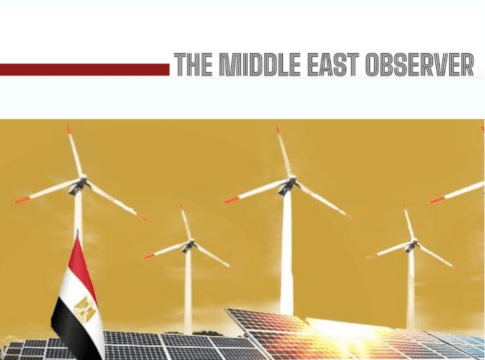
Egypt’s Cabinet has approved a major renewable energy initiative, greenlighting an offer from an international consortium led by Orascom Construction, France’s Engie and Japan’s Toyota to build a 900-megawatt onshore wind power plant in the Ras Shukeir area on the Red Sea coast, government sources confirmed. The decision authorises the signing of power purchase and land use agreements with the consortium as part of a broader strategy to expand clean energy capacity and reduce reliance on fossil fuels.
The wind project, positioned to be among Egypt’s largest, aligns with the country’s renewable energy commitments under its national energy strategy. It contributes to expanding wind power generation in a region already recognised for abundant wind resources. Analysts note that the Red Sea corridor remains central to Egypt’s ambitions to scale up wind generation capacity and integrate intermittent renewables into the national grid.
In parallel, the Cabinet endorsed a proposal from Norway’s Scatec to develop a hybrid solar and battery storage facility designed to deliver a 24-hour continuous power output. The project — incorporating a 1.7 GW (AC) solar power station coupled with 1,500 MWh of battery storage and supplementary systems in Abu Qir and Naga Hammadi — is intended to enhance grid reliability and stability as renewable penetration rises.
The approvals form part of a wider package of strategic economic decisions. The government also granted a “golden licence” to Alamein Silicon Products Company for a large-scale silicon manufacturing and purification facility in New Alamein City, anticipated to boost Egyptian silicon exports by up to 50 per cent in its initial phase and create substantial direct and indirect employment.
Separately, the Cabinet authorised the continuation of procedures to tender 580 MW of wind power capacity in the Gabal El-Zeit region, under the New and Renewable Energy Authority’s programme to attract private investment into strategic energy assets.
Government officials said the suite of measures reflects an accelerated push towards private participation in the economy, supporting energy diversification, enhancing infrastructure efficiency and strengthening Egypt’s investment appeal. They also emphasised the decisions’ alignment with broader goals to expand renewable energy’s share in the power mix, improve asset productivity and foster transparent governance in state-owned sectors.