Algeria has announced an ambitious $60 billion investment plan for its energy sector over the next five years, underscoring the North African nation’s intent to cement its position as a leading energy supplier while accelerating its shift toward cleaner and more sustainable sources.
Speaking at an energy forum in Algiers, Minister of Energy and Mines Mohamed Arkab revealed that 80 percent of the planned spending will go to upstream oil and gas exploration and production, while the remaining 20 percent will target refining, petrochemical, and renewable-energy projects. The strategy, spanning 2025-2029, positions Algeria to expand both traditional hydrocarbon output and new-energy infrastructure amid a changing global energy landscape. “We are committed to the energy transition without abandoning gas as a natural resource,” Arkab stated, framing the initiative as a balance between sustainability and economic pragmatism.
Algeria’s energy strategy rests on a pragmatic foundation: sustaining its hydrocarbon backbone while building a long-term transition toward renewables and hydrogen. The country has launched projects aimed at generating 3,200 megawatts (MW) of renewable power, supported by state-owned Sonatrach’s commitment to cut gas flaring below 1 percent by 2030. This effort is bolstered by an afforestation initiative covering 520,000 hectares, designed to offset carbon emissions and restore degraded land.
According to the Ministry of Energy, the new investment programme will prioritize oil and gas projects in Hassi Messaoud, Berkine, and Illizi basins, while advancing petrochemical capacity to increase value-added exports and reduce dependency on imported refined products.
Coinciding with the investment announcement, Sonatrach signed a landmark $5.4 billion production-sharing agreement with Saudi Arabia’s Midad Energy. The 30-year contract covers exploration and development in Algeria’s Illizi Basin, with a seven-year exploration phase fully financed by Midad.
The project is expected to yield approximately 993 million barrels of oil equivalent, including 125 billion cubic metres of natural gas, reflecting Algeria’s drive to attract foreign capital into its upstream segment. Energy analysts interpret the deal as an early demonstration of how Algeria intends to pair domestic investment with international partnerships to expand its resource base.
Energy experts have welcomed Algeria’s strategy as a balanced response to global market realities. Dr. Fatima Bouzouina, Senior Researcher at the North Africa Energy Forum, noted: “Algeria is signaling continuity with modernization. The upstream focus ensures revenue stability, while the renewables and hydrogen targets show the state’s recognition that energy diversification is no longer optional.”
Industry analysts suggest that Algeria’s dual-track approach — reinforcing hydrocarbons while developing clean-energy technologies — may serve as a model for other African producers seeking to finance energy transitions without jeopardizing economic stability.
Algeria’s announcement comes amid renewed investment across North Africa. Earlier this year, Italy’s Eni pledged $26 billion in the region over the next four years, underlining Europe’s growing interest in secure Mediterranean energy supply chains. Meanwhile, the EU continues to seek alternative gas sources to reduce reliance on Russian imports — a dynamic that positions Algeria as a critical partner.
With proven gas reserves exceeding 2.3 trillion cubic metres and oil reserves of over 12 billion barrels, Algeria already ranks among the top three African producers. Its new plan aims to enhance output capacity, boost export earnings, and modernize infrastructure to meet both domestic and international demand.
The main Strategic Strengths of Algeria are the Vast untapped reserves and long-standing export infrastructure connecting to Europe via Medgaz and TransMed pipelines, High solar potential and existing grid framework suitable for large-scale renewable projects and Growing diplomatic and financial ties with Gulf and European energy investors.
While main Key Risks lie in Execution challenges in large-scale renewables and hydrogen projects, which require complex technology transfer and financing, Commodity-price volatility and competition from emerging African gas suppliers and Climate-finance scrutiny, as global investors increasingly favour projects with measurable decarbonization outcomes.
The Ministry of Energy is preparing a new licensing round in early 2026 to attract additional foreign investors into upstream and unconventional resources. Sonatrach, meanwhile, is set to launch a series of petrochemical expansions in Hassi Messaoud and Arzew to boost refined-product exports.
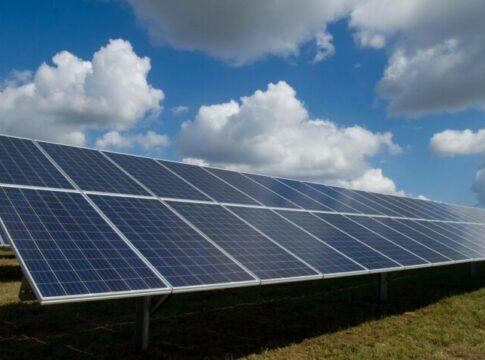
On the renewables side, Algeria plans to commission 22 solar sites across its southern provinces by 2026, forming part of its 3,200 MW renewable-energy roadmap. Pilot green hydrogen projects are also in the pipeline, supported by partnerships with German and Emirati firms.
If executed as planned, these projects could transform Algeria into a regional energy hub, capable of exporting both conventional fuels and low-carbon energy to global markets.