
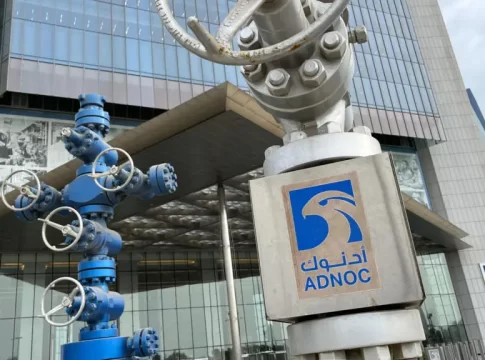
Abu Dhabi National Oil Company’s (ADNOC) audacious A$36 billion (US$23.8 billion) takeover bid for Santos—a cornerstone of Australia’s gas landscape—marks the largest-ever foreign acquisition of an Australian energy asset. With a 28% premium on market price, the offer has earned board approval. Yet, as scrutiny tightens by the Foreign Investment Review Board (FIRB) and Treasurer Jim Chalmers, questions loom over national interest and domestic gas security.
ADNOC brings substantial capital and ambition. Its $100 billion annual revenue base means Santos’ development pipeline—from Barossa to PNG LNG and Darwin—could be expedited with fresh funding. Analysts suggest this could enhance Asia-Pacific LNG supply at a time of tightening global markets.
Moreover, ADNOC’s state-backed credentials may reduce financing risks, allowing Santos to invest more aggressively in carbon capture and domestic field expansion . XRG—ADNOC’s recently formed investment arm—plans to double its asset base and deepen global low-carbon energy footprint.
However, energy security advocates raise alarms. Santos supplies both domestic markets and exports; by mid‑2029, eastern Australia may face gas shortages unless domestic reserves are prioritised. With over 70% of Queensland gas production destined for LNG export, local consumers risk being sidelined under foreign ownership. Australian Energy Producers and the Australian Workers’ Union have urged government-imposed conditions: domestic supply quotas, pipeline infrastructure expansion, and mandatory local processing plant sales.
In what some describe as a “high-stakes gamble,” FIRB’s forthcoming decision must balance national security with foreign investment benefits. With past precedents—including rejected deals like Shell-Woodside—regulatory conditions may be stringent.
ADNOC’s acquisition will require green lights not only in Australia but also in Papua New Guinea and possibly the U.S. (for its Alaskan interests), raising regulatory complexity. South Australia’s insistence on job and headquarters security adds another layer of political pressure.
If approved with strong safeguards—such as domestic supply guarantees and infrastructure commitments—the deal could unlock dividends:
- Upside for investors: Santos’ share price may recover to the bid level (~A$8.89/share), offering up to 14% return.
- Capital infusion: Accelerated project funding might open the floodgates to further LNG capacity additions, crucial amid Asia’s energy hunger.
Conversely, failure or excessive conditions could depress Santos’ value and delay strategic infrastructure, worsening domestic shortages .
Overall, the takeover reflects global shifts in energy ownership and strategic positioning by state-owned energy giants. For Australia, the logical stance is a conditional approval—one that locks in a flexible domestic gas supply, fosters infrastructure expansion utilising the wide resources of Australia, and retains key operations locally. This hybrid path supports energy security while leveraging foreign direct investment to drive domestic energy development.