
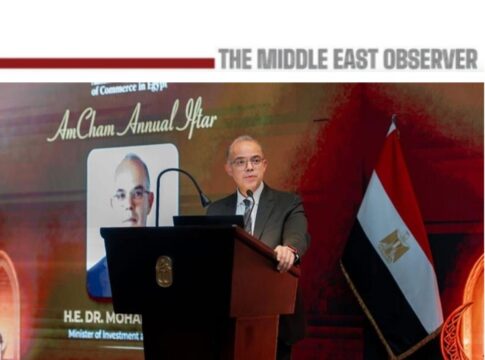
CAIRO — Egypt is preparing to establish a new co-investment fund aimed at supporting high-growth companies and strengthening the country’s capital markets, according to Investment and Foreign Trade Minister Mohamed Farid.
Speaking at a meeting hosted by the American Chamber of Commerce in Egypt, Farid said the initiative forms part of broader efforts to attract long-term financing and deepen market participation as investor activity accelerates. Official figures show that the number of new participants entering Egypt’s capital market has risen sharply—from around 20,000 annually in previous years to between 250,000 and 300,000 investors, with about 180,000 new investors expected in 2026.
According to statements published by the Egyptian Cabinet’s Media Center, the planned fund will partner with private investors to finance companies with strong growth potential, encouraging investments with horizons of 10 years or more rather than short-term speculative flows.
Farid said the government is also working to register venture capital firms and investment funds operating in Egypt’s startup ecosystem, a move designed to improve transparency and regulatory oversight.
The minister attributed the surge in investor participation partly to digital reforms introduced by the Financial Regulatory Authority, including electronic identity verification, digital contracts and remote account opening through NFC-enabled passports, allowing investors to join the market without visiting brokerage offices.
Authorities are also studying measures to accelerate the settlement cycle for public offerings, shortening the time between subscription and share allocation to just a few days.
Beyond capital markets, Farid highlighted efforts to expand industrial financing and export capacity, noting that international companies increasingly view Egypt as a regional manufacturing and export hub.
He pointed to recent investments by global firms such as Mars Incorporated, which has committed $250 million to expand production in Egypt, with roughly 90% of output destined for export markets.
Farid said the reforms are part of a broader strategy to build investor confidence, stressing that sustainable growth will depend on continued structural reforms and practical solutions to challenges faced by businesses and entrepreneurs.