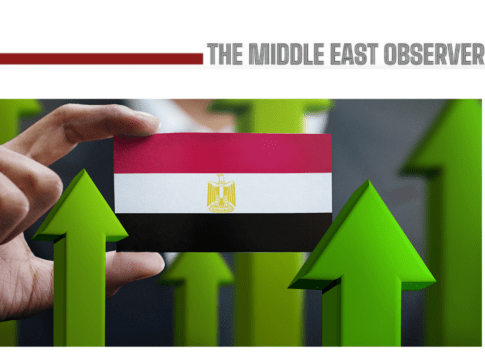
Cairo — Egypt’s economic reform program continues to translate into measurable macroeconomic gains, with official figures confirming that gross domestic product (GDP) expanded by 5.3 percent in the first quarter of fiscal year 2025/2026. The result marks the strongest quarterly performance since FY 2021/2022 and signals renewed growth momentum amid ongoing structural adjustments.
The figures were announced by the Ministry of Planning and Economic Development and reflected in releases by the State Information Service, underscoring the government’s emphasis on institutional transparency as the country proceeds through a critical phase of its reform framework.
While market observers have referenced similar performance in the second quarter, published official confirmations presently substantiate the 5.3 percent figure for the fiscal year’s opening quarter. Updated statistical bulletins are anticipated in due course.
Speaking during the weekly cabinet session, Planning Minister Ahmed Rostom indicated that annual growth for FY 2025/2026 is now projected at approximately 5.2 percent, exceeding the earlier 4.5 percent target embedded in fiscal planning assumptions.
The upward revision aligns with the latest projections from the International Monetary Fund, which recently adjusted its outlook for Egypt’s real GDP growth to 4.7 percent for the current fiscal year, with further acceleration expected in FY 2026/2027.
These developments come as the IMF prepares to assess the fifth and sixth reviews under Egypt’s Extended Fund Facility, alongside the first review under the Resilience and Sustainability Arrangement — a procedural milestone closely monitored by international investors and sovereign credit institutions.
A notable feature of the current expansion is the growing contribution of non-oil activity. According to official data, the non-oil sector added approximately 1.2 percentage points to overall growth, with industrial activity registering solid gains supported by localization initiatives and export expansion.
Non-oil exports rose significantly during 2025, driven by finished and semi-finished goods, reinforcing Cairo’s stated objective of repositioning Egypt as a competitive regional manufacturing and export hub. The government has set an ambitious export target of $115.8 billion by 2030, supported by export council strategies aimed at sustaining double-digit annual growth.
Financial services also recorded robust performance, with banking and insurance sectors expanding at double-digit rates, reflecting continued financial deepening and expanded inclusion measures.
Labor market indicators show moderate improvement, with unemployment declining to 6.2 percent. Female participation rates increased year-on-year, a trend officials attribute to broader labor market reforms and targeted inclusion initiatives.
Sectoral employment growth was recorded in tourism, non-oil industry, transport, trade, health, and education. The Suez Canal Authority reported signs of partial stabilization during the second quarter, as shipping activity gradually resumed following disruptions linked to regional security tensions in the Red Sea corridor.
Although canal revenues had experienced notable contraction over the previous two years due to geopolitical instability, officials point to early indicators of recovery as maritime traffic patterns normalize.
Beyond headline growth, the government reaffirmed its medium-term objective of reducing the debt-to-GDP ratio to 40 percent or below by the end of the fiscal year — a move aimed at strengthening sovereign balance sheet resilience and improving long-term fiscal sustainability.
Egypt has also raised its long-term growth target to 7.5 percent by 2030, reflecting confidence in the structural reform agenda, industrial localization policy, and expanded export capacity.
For policymakers, the current figures serve as both validation and test. Validation, because they reflect measurable outcomes following currency adjustments, fiscal consolidation, and structural reform measures. Test, because sustaining growth above five percent will require continued private sector activation, investment inflows, and export competitiveness in a complex global environment.
As the IMF review cycle advances and international markets assess Egypt’s fiscal and monetary discipline, the coming quarters will determine whether the current momentum consolidates into a durable growth phase — or remains contingent on external conditions.
For now, the data signals a strengthening recovery and a reform program entering a more confident stage.