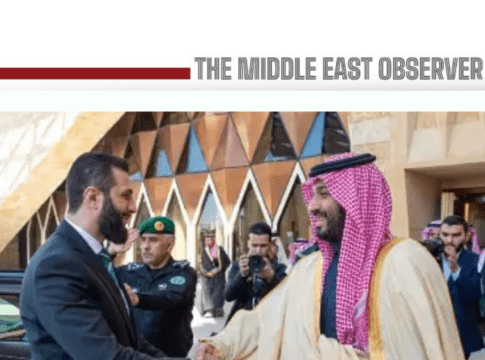
Saudi Arabia and Syria signed a new package of strategic investment agreements in Damascus during meetings between senior Syrian officials and a high-level Saudi delegation led by the Kingdom’s Ministry of Investment, marking a shift from diplomatic normalization to projects intended for on-the-ground execution.
The agreements span aviation, telecommunications, water and industrial infrastructure, and are structured to anchor Syria’s economic recovery through phased investments rather than one-off commitments. Reuters described the package as the most substantive international economic engagement with Syria since the easing of Western sanctions in late 2025, and part of a broader Saudi effort to re-integrate the country into Arab economic networks after more than a decade of isolation.
In aviation, the largest disclosed commitment is a SAR 7.5 billion (around US$2 billion), multi-phase programme financed through the Saudi-backed Elaf investment fund to develop and operate two airports in Syria. The programme focuses on modernising terminals, airside infrastructure and operational capacity, with international reporting noting that one of the airports under the plan is being designed to handle up to around 12 million passengers annually, underscoring the scale of Saudi ambitions in restoring Syria’s air transport sector as a driver of trade and mobility.
Complementing airport redevelopment, the parties also agreed to establish a new low-cost carrier, “Nas Syria”, as a joint venture between Saudi airline flynas and Syrian civil aviation authorities. According to Reuters, the carrier will be structured with 51% Syrian ownership and 49% held by flynas, and is expected to begin operations in the fourth quarter of 2026, restoring regional connectivity and lowering travel costs for commerce, tourism and diaspora travel.
Telecommunications form the second major priced pillar of the agreements. stc is investing more than SAR 3 billion (roughly US$800 million to nearly US$1 billion) to roll out a national fibre-optic backbone exceeding 4,500 kilometres, alongside broader digital infrastructure under the Silk Link project. Syrian officials cited in international media said the project would be executed in two stages over up to two years, aiming to improve internet quality domestically while positioning Syria as a future regional data transit corridor linking Asia and Europe.
In water and utilities, Saudi Arabia’s ACWA Power, working with Saudi water transmission entities, signed an agreement with Syrian counterparts to develop a seawater desalination plant and associated freshwater conveyance infrastructure. Unlike the aviation and telecom pillars, the water initiative is framed as a development roadmap rather than a fully priced EPC contract, highlighting both its strategic importance and the sequencing risks that still surround large-scale infrastructure delivery in post-conflict Syria.
The industrial dimension of the package includes an agreement between Riyadh Cables Group and the Syrian sovereign fund to rehabilitate and operate the Syrian Modern Cables Company. Company disclosures indicate around SAR 60 million in capital investment to upgrade production, supporting domestic supply of power and telecom cables needed for grid repair, housing and digital infrastructure, and reducing reliance on imports during the reconstruction phase.
Taken together, the agreements create a layered economic impact. In the short term, they are expected to generate construction activity, restore connectivity and reactivate basic services. Over the longer term, they aim to rebuild transport hubs, digital backbones, utilities and industrial capacity that could underpin private investment and trade. The deals also sit within a wider pipeline: international media have reported that dozens of Saudi–Syrian agreements worth several billions of dollars have been signed since mid-2025, underscoring that the latest package represents a tranche in an expanding reconstruction portfolio rather than a single, isolated push.
Closing the meetings in Damascus, Saudi Investment Minister Khalid Al-Falih underlined Riyadh’s strategic intent, stating that there is “no cap on Saudi investments in Syria”, and describing the country as having set its course “in the right direction” to become an increasingly attractive destination for regional and international capital.