
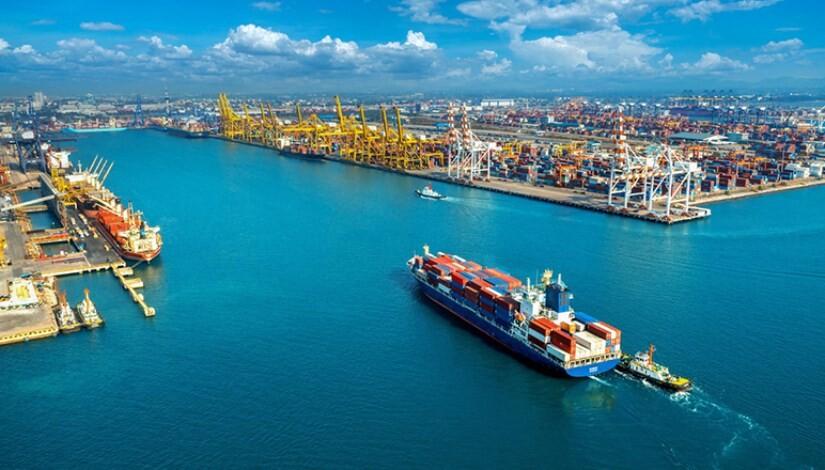
Egypt’s General Authority for the Suez Canal Economic Zone (SCZONE) has reported record revenues of EGP 11.6 billion for the 2024/25 fiscal year, a 38% increase compared with the previous year. The figure not only exceeded the authority’s budget estimate of EGP 10.5 billion but also confirmed the zone’s growing role as a cornerstone of Egypt’s industrial and trade policy. Net profit surged to EGP 8.6 billion, up 51% from EGP 5.7 billion in FY 2023/24, and nearly tripled the original forecast of EGP 2.96 billion. Expenses for the year stood at about EGP 2 billion, underscoring the operational efficiency that enabled such margins despite broader economic headwinds.
The strong performance comes against the backdrop of a severe contraction in Suez Canal shipping revenues. Disruptions in the Red Sea during 2024 and early 2025 forced many vessels to reroute around Africa, dragging canal receipts down by 61% year-on-year in the first quarter of FY 2024/25 and slashing Egypt’s FX inflows. Canal revenues, which had reached a record in 2023, fell to around $4.0 billion in calendar year 2024. SCZONE’s resilience in this environment highlights the extent to which its industrial and logistics operations have decoupled from canal traffic, broadening Egypt’s economic diversification strategy.
Investment conversion was a key driver of the zone’s outperformance. In FY 2024/25, SCZONE signed 129 final contracts worth approximately $4.4 billion, expected to generate more than 31,000 direct jobs. Since the start of the new fiscal year in July 2025, a further 26 projects valued at $1.85 billion have been added, taking the 14-month total to 155 projects worth roughly $6.3 billion. Over a broader 38-month horizon, the authority has attracted 334 projects with a combined planned investment of $10.4 billion, spanning sectors from textiles and garments to PVC flooring, solar panels, recycling, and tire manufacturing.
The results also feed into Egypt’s wider fiscal consolidation effort under its IMF program. With the government targeting a 4% of GDP primary surplus in FY 2025/26, SCZONE’s record performance provides a supportive micro-fiscal anchor at a time of currency pressures and high external debt service. However, the translation of EGP-denominated gains into hard currency remains a challenge for international investors, as depreciation since March 2025 has inflated nominal revenues without equivalent dollar gains. On prevailing exchange rates, SCZONE’s revenues equated to around $237–242 million, a reminder of Egypt’s ongoing FX vulnerabilities.
The zone’s momentum places it within a broader regional race for logistics and industrial investment. Morocco’s Tanger Med port complex handled over 10 million TEU and 142 million tons of cargo in 2024, cementing its role as the Mediterranean’s largest hub. Dubai’s Jebel Ali Free Zone (JAFZA) posted non-oil trade of roughly AED 713 billion ($190 billion) in 2024, dwarfing Egyptian throughput but offering a benchmark for scale. Oman’s Sohar Freezone, meanwhile, attracted $1.8 billion in investments in 2024 and more than $1.3 billion in the first half of 2025, underlining the competitive landscape Egypt faces in luring midstream and downstream manufacturing.
Looking ahead, SCZONE appears well-positioned to capitalize on shifting supply chains and near-market manufacturing trends as multinationals seek to de-risk exposure to longer trade routes. The risks, however, remain considerable: security challenges in the Red Sea, tight foreign-currency liquidity, and the pace of Egypt’s structural reforms under IMF oversight. Nonetheless, the record FY 2024/25 results mark a breakthrough year for the zone and a counterweight to the canal’s downturn—signalling the potential for Egypt to consolidate its role as a manufacturing and logistics hub at the crossroads of Africa, Asia, and Europe.