
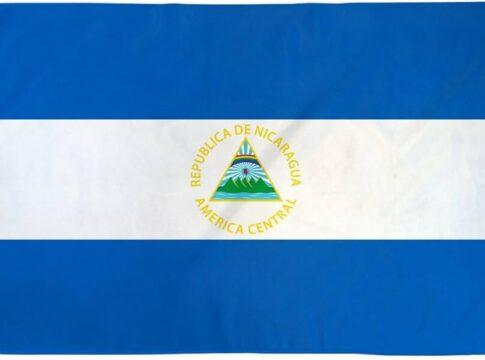
On the fifteenth sunrise of September 1821, Nicaragua — like its Central American neighbors — awoke to independence. The new day was not just a break from colonial rule, but the beginning of a long narrative written in verses of poetry, shaped by fire-breathing volcanoes, and tempered through revolutions, reconciliations, and rebuilding. Each year, Independence Day becomes a living moment: parades in León, fireworks over Managua, families sharing gallo pinto, and school children carrying flags — all affirming that liberty, though tested, continues to glow like the eternal flames of Masaya’s crater.
Across the oceans, Egypt extends a hand to Nicaragua, seeing in its rugged resilience a partner of promise. Diplomatic relations exist, but the shared story is still in its opening chapters. For now, the exchanges are modest, yet the potential is visible — in agricultural trade, in industrial supply chains, and in knowledge-sharing on climate resilience.
Nicaragua’s economy faces hurdles — a trade deficit near 15% of GDP in 2023, external debt pressures, and currency challenges. Yet opportunity stirs: new trade agreements, especially with China, are reducing tariffs and opening markets for Nicaraguan exports. This signals an economy seeking diversification and growth.
Egypt, meanwhile, is positioned as both a market and bridge. While precise figures for Egypt–Nicaragua trade are not widely reported, the complementarities are clear:
Nicaraguan Exports to Egypt (potential): coffee, nuts, tropical fruits, and specialty agriproducts.
Egyptian Exports to Nicaragua: fertilizers, pharmaceuticals, construction materials, textiles, and renewable energy technology.
Beyond trade, cooperation could unfold in:
Climate resilience: joint projects on water management, drought mitigation, and sustainable agriculture.
Tourism: leveraging Nicaragua’s ecotourism potential with Egyptian hospitality and investment expertise.
Education and training: technical programs in food safety standards, regulatory alignment, and skill-building.
Renewable energy: Nicaragua’s volcanoes and hydropower resources align with Egypt’s ambitions in solar and wind.
Challenges: long distances, limited logistics, certification requirements for agro-exports, and Nicaragua’s macroeconomic risks.
Opportunities: trade missions, bilateral MoUs on standards, participation in fairs and expos, and Egypt serving as a gateway for Nicaraguan products into Africa and the Middle East.
On this Independence Day, The Middle East Observer salutes the people of Nicaragua — a nation where volcanoes stand as symbols of strength and poetry flows as the language of hope. May your fifteenth sunrise of freedom continue to blaze with resilience, may trade bridges to Egypt be built strong and lasting, and may the flowers of your coffee fields carry the fragrance of partnership across the seas.
