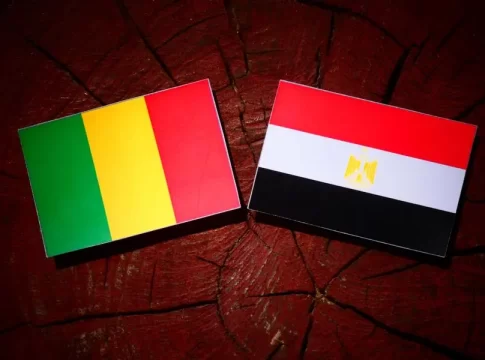
On a September morning in Bamako, the air hums with the sound of the kora — the 21-stringed harp that has sung Mali’s story for centuries. Its notes carry memories of empire and struggle, of resilience in the Sahel, and of a nation that, on 22 September 1960, claimed its place in the world. Though the decades since have brought storms — political transitions, security trials, regional pressures — Mali has never let the melody fade. Each generation returns to that first independence day, hearing in it not only pride but the unyielding promise: we endure, we build, we dream.
Today, the melody finds harmony with another ancient river — the Nile. Egypt and Mali, each rooted in civilizations older than maps, are now writing a new duet of cooperation. In July 2025, a Business Forum in Bamako gathered officials, entrepreneurs, and visionaries from both countries. The theme was clear: integration built on trust, opportunity built on partnership.
Egypt’s Foreign Minister, Badr Abdelatty, called the forum “a new and important milestone in the path of strengthening the economic and trade partnership between Egypt and Mali.” He stressed that Egypt’s role was not limited to trade — it extended to stability, training, and cultural ties, all aligned with Mali’s Development Plan 2024–2033 and its bold long-term vision, Mali Koura 2063.
Current trade volumes between Egypt and Mali remain modest, but the ambition is grand. The forum pledged to elevate trade exchange, diversify exports, and open markets.
- Egyptian exports to Mali: pharmaceuticals, infrastructure materials, agricultural technology, textiles, and food products.
- Malian potential exports via Egypt: agricultural produce, timber, and regional re-exports within ECOWAS markets.
More than 100 Malian officials have already benefited this year from Egyptian training programs in governance, peacebuilding, and professional development.
The story of cooperation stretches beyond figures:
- Industrial and infrastructure ventures: Arab Contractors and Egyptian textile and pharmaceutical firms are evaluating joint projects in Mali.
- Educational and religious cooperation: Al-Azhar continues to send envoys, while Egyptian institutions run workshops in Bamako on peacebuilding and counter-extremism.
- Security and stability: Egypt has pledged to remain a partner for Mali in combating terrorism and promoting regional peace, with contributions from the Cairo International Center for Conflict Resolution, Peacekeeping and Peacebuilding (CCCPA).
- Diplomatic ties: A new MoU has been signed between the foreign ministries to establish structured political consultations.
The horizon holds many opportunities:
- Expanding Egyptian exports of pharmaceuticals, construction goods, and agricultural technologies.
- Positioning Mali to use Egypt as a gateway to wider African and Middle Eastern markets.
- Renewable energy collaboration — from Sahelian solar power to hydroelectric initiatives — as well as joint work in drought management and water resources.
- Strengthening transport and logistics links to stabilize trade and lower costs.
- Exploring preferential trade agreements or investment protection frameworks to encourage private sector participation.
On this National Day, The Middle East Observer extends its warmest congratulations to Mali — a nation whose music continues to inspire the Sahel, whose people persevere through adversity, and whose vision stretches boldly toward 2063. May the kora’s strings resound in harmony with the Nile, weaving a shared future of prosperity, stability, and enduring friendship.