
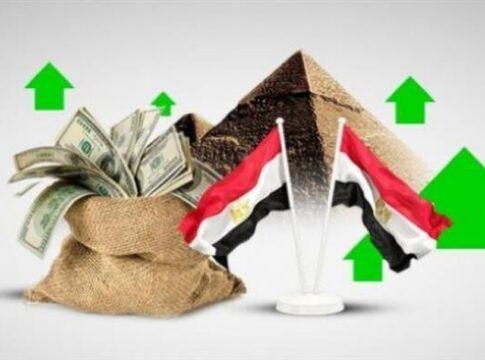
In a global economic environment defined by turbulence—from geopolitical conflicts to monetary tightening and volatile markets—Egypt has quietly engineered what may be its most resilient economic chapter in decades. Headlining the transformation is a primary budget surplus of 3.1%, the highest in 20 years—an achievement that signals far more than healthy books; it marks a seismic shift in how Egypt navigates growth, debt, and inclusion.
While the figure may seem abstract to the average Egyptian, behind it lies a broader story: an evolving national strategy that is leaning into private sector dynamism, structural reform, and a reimagining of public finance.
At the heart of Egypt’s transformation is a new economic doctrine centered on flexibility, decentralization, and sustainability. In a recent high-level meeting in New Alamein, the Coordinating Council for Fiscal and Monetary Policies—chaired by Prime Minister Mostafa Madbouly—reaffirmed its commitment to a flexible exchange rate, the state IPO program, and the State Ownership Policy Document. These reforms are not symbolic—they are tangible steps to generate resources, foster competition, and deepen market confidence.
Through the National Structural Reform Program, Egypt is shifting from a state-led economic model to one where the private sector is expected to drive more than 60% of new investments, a notable departure from past patterns dominated by public and military-run enterprises.
Remittances: The Unsung Hero
Perhaps one of the most overlooked forces behind Egypt’s fiscal stability has been its diaspora. Remittances from Egyptians abroad surged a staggering 82.7%, reaching over $26 billion in just nine months. These transfers not only buoy family incomes but also help stabilize the Egyptian pound and reduce dependence on foreign debt.
Tax Revenues and Spending with Purpose
Egypt has also pulled off an impressive feat in fiscal management: a 38% increase in tax revenues without raising taxes—achieved through better collection and wider compliance. Meanwhile, social spending has soared:
- Healthcare up 27%
- Education up 23%
- Takaful and Karama social protection program up 24%
- Publicly funded medical treatment up 35%
This signals a critical shift from infrastructure-heavy spending to investments in human capital and equitable growth—a move long demanded by economists and civil society.
Foreign Direct Investment: A Turning Point
Egypt has become a magnet for investment in 2025. The first half alone saw $9 billion in net FDI, driven largely by the landmark $35 billion Ras El Hekma agreement with the UAE in 2024. That pushed the full-year FDI to nearly $47 billion, up from just $10 billion in 2023.
As of mid-2025, 50 golden licenses have been issued to fast-track strategic projects, with 34 in industrial sectors and 5 in renewable energy, reinforcing Egypt’s commitment to diversification and sustainability. Currently The United Kingdom aims to invest $100 million this year in Egypt’s industrial, clean energy, healthcare, and education sectors, according to Charlie Garnett, Director of Trade and Business for Egypt and Libya at the British Embassy in Cairo, pointing out that the “Golden License” launched by the Egyptian government is an attractive opportunity for foreign investors, as it provides significant facilitation in obtaining approvals and licenses, reflecting the strong growing confidence in the Egyptian economy. Other projects in the pipeline also pave the way for promising projects that span through various industries.
Debt and Domestic Financing Innovation
While debt remains a critical challenge for Egypt, the country has taken a notably divergent path from many other economies grappling with deepening external liabilities. While strategically maneuvering its expansion into foreign debt exposure, Egypt managed to reduce its external obligations by $2 billion and successfully extended the average maturity of its debt portfolio—an important step toward improved fiscal sustainability.
During the recent New Alamein meeting, Cabinet Spokesman Mohamed El Homsany confirmed the government’s steady progress in repaying the petroleum sector’s arrears to foreign partners, adhering closely to its pre-announced schedule—an achievement that reinforces Egypt’s commitment to honoring financial obligations.
One of the most innovative shifts in Egypt’s financing strategy is the introduction of retail bonds—government-backed instruments specifically designed for individual investors. These bonds offer inflation-resistant, competitive returns, enabling the state to mobilize domestic capital and reduce reliance on foreign borrowing. If adoption is facilitated—particularly through digital platforms and fintech solutions—retail bonds could democratize investment, foster public trust, and create a sustainable, citizen-driven funding channel for national development.
This initiative not only strengthens the link between the government and its citizens but also presents a potential long-term solution to Egypt’s external debt burden and U.S. dollar demand. By incentivizing savings in local currency and enhancing domestic liquidity, this approach could support currency stabilization, promote fairer exchange dynamics, and ultimately contribute to a more balanced valuation of the Egyptian pound.
Export Engines Roar: Agriculture and Engineering Lead the Way
Egypt’s external trade is no longer just about Suez Canal receipts and oil. In 2025, the country’s agricultural exports crossed 6.2 million tons by mid-July, up 575,000 tons year-on-year—a new record.
Meanwhile, engineering exports hit $3.1 billion in H1 2025, up 15% from the previous year. June alone saw a 7% year-on-year increase, with robust global demand for Egyptian-made electrical appliances, automotive parts, and machinery.
Tourism Rebounds Stronger Than Ever
Tourism, long a pillar of Egypt’s economy, has roared back. The first half of 2025 welcomed 8.7 million tourists, a 24% increase over the same period in 2024. Revenue from the sector reached $15.3 billion in 2024, and in just the first nine months of FY 2024/25, it brought in $12.5 billion, up 15.4% year-on-year. Longer stays and increased spending per visitor point to a maturing and more profitable tourism sector.
Currency Confidence and Consumer Relief
After a prolonged period of volatility, the Egyptian pound is regaining ground, appreciating below EGP 49/USD—its strongest level since October 2024. This currency stabilization has had knock-on effects, especially in the automotive market, where vehicle prices have fallen by up to 23%, thanks to increased supply, stronger domestic production, and strategic import policies.
“Between 15 and 18 brands have lowered their prices,” confirmed Osama Abu El-Magd, head of the Egyptian Automotive Dealers Association. This is a welcome development for middle-class consumers long priced out of the market.
The Road Ahead: Challenges and Momentum
While the numbers are compelling, the real test lies ahead. Egypt must ensure that increased social spending translates into real services, that retail bonds are adopted widely, and that FDI inflows are channeled into long-term, job-creating industries.
Nonetheless, the broad direction is clear. Egypt is rebalancing its economy from the inside out, leveraging domestic savings, boosting exports, building fiscal credibility, and charting a path toward self-sufficiency—one bold step at a time.
Key Highlights
- Primary budget surplus: 3.1% – Highest in 20 years
- Remittances: $26B in 9 months – Up 82.7%
- FDI (2025 H1): $9B; Total 2024 FDI: $47B
- Tax revenue: Up 38% with no new taxes
- Retail bonds launched to deepen domestic financing
- Agricultural exports: 6.2M tons – New record
- Engineering exports: $3.1B in H1 2025 – All-time high
- Tourism (H1 2025): 8.7M tourists – Up 24%
- Car prices down up to 23% as pound strengthens
- Social spending: Healthcare +27%, Education +23%, Cash transfers +24%