
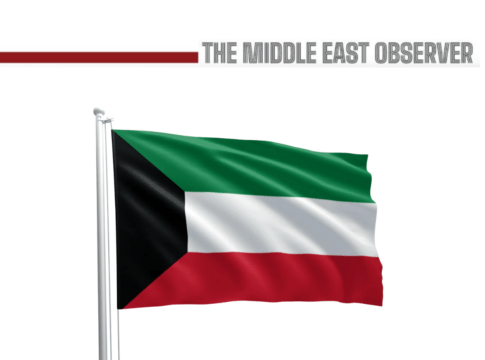
On 25 February 2026, the State of Kuwait marks its 65th National Day — a milestone that reflects both a distinguished historical legacy and a forward-looking national vision. The occasion commemorates the accession of Sheikh Abdullah Al-Salem Al-Sabah in 1950, whose leadership shaped Kuwait’s constitutional and parliamentary foundations and paved the way for independence in 1961.
Today, Kuwait stands among the Gulf’s high-income economies, supported by the world’s sixth-largest proven oil reserves and a well-established sovereign wealth framework. With a population of approximately 5.1 million, the country continues to consolidate its position as a regional financial and energy hub while advancing diversification under long-term development strategies.
Kuwait’s economy remains fundamentally petroleum-driven, with crude oil, refined petroleum products, and petroleum gas forming the backbone of exports. International trade data indicates that energy products accounted for the overwhelming majority of export revenues in 2024, reaffirming Kuwait’s standing as a key global energy supplier. At the same time, its import structure — encompassing machinery, transport equipment, and advanced electrical systems — reflects a modern infrastructure base and presents expanded opportunities for international commercial partnerships.
Economic relations between Egypt and Kuwait continue to demonstrate resilience and strategic complementarity. Bilateral trade reached approximately $1.2 billion in 2024, with the balance favoring Kuwait, largely due to Egyptian imports of mineral fuels and petroleum derivatives.
Kuwaiti exports to Egypt were valued at approximately $947 million, primarily consisting of mineral fuels, petrochemicals, and plastics. Egyptian exports to Kuwait totaled around $275 million and included agricultural products, fresh produce, ready-made garments, and electrical machinery — sectors that underscore Egypt’s role as a diversified production base serving Gulf markets.
Beyond trade flows, investment ties remain the cornerstone of the partnership. Kuwaiti investments in Egypt are estimated at nearly $20 billion, spanning finance, industry, real estate, and construction. A significant share of projects financed by the Kuwait Fund for Arab Economic Development is located in Egypt, reinforcing Kuwait’s longstanding role as a strategic development partner.
Recent high-level engagements — including President Abdel Fattah El-Sisi’s visit to Kuwait in April 2025 — have focused on expanding trade integration, strengthening private-sector collaboration, and facilitating capital mobility. Bilateral agreements on investment protection and the avoidance of double taxation further provide a stable legal foundation for sustained cross-border economic activity.
Looking ahead, both nations stand before a broad horizon of strategic opportunity. Energy cooperation remains central, particularly in refining, petrochemicals, and the progressive integration of renewable energy within evolving national strategies. Food security and agriculture offer natural complementarities, with Egypt’s agricultural production capacity well positioned to serve Gulf markets, including Kuwait, through structured supply chains and agro-industrial partnerships.
Infrastructure and real estate continue to present strong prospects, as Kuwaiti investors maintain active participation in Egyptian mega-projects across urban expansion, logistics, and industrial zones. Industrial localization initiatives create pathways for joint manufacturing ventures serving African and regional markets from Egypt as a production base. Meanwhile, financial services form a vital connective pillar, with banking partnerships, investment platforms, and capital market linkages between Cairo and Kuwait City reinforcing liquidity flows and enabling sustained business expansion.
Kuwait’s National Day is not only a celebration of sovereignty and constitutional progress; it also underscores the enduring strength of Gulf–Arab partnerships grounded in economic complementarity and mutual confidence. As Egypt advances structural reform and export-led growth, and Kuwait accelerates diversification beyond hydrocarbons, the bilateral corridor is positioned for deeper integration.
In a region shaped by strategic realignments and evolving energy dynamics, Egypt and Kuwait represent a partnership built on stability, capital mobility, and shared development priorities — one poised to expand in both scale and sophistication in the years ahead.