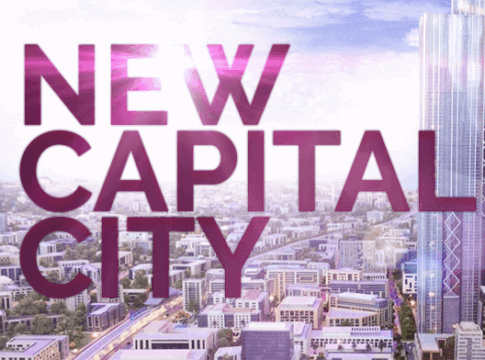
In a move reflecting both progress and national identity, Egypt has officially renamed its New Administrative Capital to “The New Capital” in all government and official correspondence, according to the Administrative Capital for Urban Development (ACUD) — the state-owned company overseeing the project.
The renaming marks a significant milestone in Egypt’s decades-long effort to modernize its urban and administrative infrastructure, signaling a shift from the project’s construction phase toward full operational readiness.
Located approximately 60 kilometers east of Cairo, The New Capital represents one of the most ambitious urban projects in the Middle East and Africa. Spanning over 170,000 feddans (around 688 square kilometers) — nearly four times the size of Washington, D.C. — the city embodies the government’s vision for a smart, sustainable, and globally connected metropolis.
The New Capital has been designed to ease congestion in Greater Cairo, redistribute population density, and create a new hub for government, business, and culture. It stands as a “fourth-generation city”, integrating digital infrastructure, renewable energy, and intelligent transport systems.
Already, the city has become the administrative heart of Egypt, hosting ministries, government headquarters, parliament, and foreign embassies within its expansive districts. The move of government operations from central Cairo has been widely regarded as a cornerstone of Egypt’s Vision 2030 urban transformation plan, ensuring modernized governance supported by digital systems and smart connectivity.
Beyond politics and infrastructure, The New Capital is also envisioned as a symbol of coexistence and cultural identity. It houses the Cathedral of the Nativity of Christ, the largest cathedral in the Middle East, and the Misr Mosque, which ranks among the largest mosques in Africa. Together, these landmarks underscore Egypt’s message of religious harmony and national unity.
The city also boasts a Central Business District featuring one of Africa’s tallest skyscrapers — the Iconic Tower — along with state-of-the-art residential zones, international universities, and cultural centers, making it a fully integrated urban ecosystem.
When fully complete, The New Capital is projected to accommodate up to 10 million residents, reshaping Egypt’s demographic and economic landscape. The development aligns with the country’s long-term strategy to attract investment, foster innovation, and enhance quality of life for future generations.
Officials at ACUD emphasize that the renaming to “The New Capital” reflects the project’s evolving maturity — from an administrative relocation effort to a living, thriving metropolis that encapsulates Egypt’s ambition for the 21st century.