Every year on October 29, the Republic of Turkey celebrates its National Day, marking the birth of the modern Turkish state in 1923. On that day, following the collapse of the Ottoman Empire in the aftermath of World War I, Mustafa Kemal Atatürk formally proclaimed the establishment of the Republic of Turkey — a decisive moment that transformed the country from a monarchy into a secular, democratic republic. The declaration, made in Ankara, ushered in sweeping reforms that redefined Turkey’s national identity, governance, and global outlook.
Republic Day, or Cumhuriyet Bayramı, is more than a commemoration of statehood; it is a national reaffirmation of pride, unity, and modernization. Streets and landmarks across Turkey are adorned with red flags and crescents, parades fill city squares, and fireworks illuminate the skies over Ankara and Istanbul. The celebrations symbolize a living legacy — Atatürk’s vision of a nation rooted in sovereignty and guided by education, equality, and progress.
Situated at the crossroads of Europe and Asia, Turkey’s geography has always made it a strategic player in global affairs. The country sits like a bridge between continents, surrounded by three seas — the Black Sea, the Mediterranean, and the Aegean — and blessed with fertile lands, mountains, and trade routes that have connected civilizations for millennia. Its capital Ankara serves as the seat of government, while Istanbul, divided by the Bosporus Strait, remains the cultural and economic heart of the nation — a metropolis that spans both Europe and Asia.
Turkey’s tourism industry has long been one of the jewels of its economy. In 2024, the country welcomed more than 52.6 million tourists, generating a record USD 61.1 billion in revenue, securing its place among the world’s top six travel destinations. The attractions are as diverse as the nation’s landscape: the majestic Hagia Sophia and Topkapi Palace in Istanbul; the ancient city of Ephesus, a marvel of Greco-Roman antiquity; the dreamlike rock valleys of Cappadocia; and the otherworldly terraces of Pamukkale, shimmering in white calcium cascades. Along the Aegean and Mediterranean coasts, destinations such as Antalya, Bodrum, and Izmir offer luxury resorts, crystal-clear waters, and the warmth of Turkish hospitality. Increasingly, Turkey is also a global hub for medical, wellness, and cultural tourism, attracting millions seeking a blend of history and modern comfort.
Economically, Turkey stands as one of the world’s most dynamic emerging markets. Strategically positioned between Europe, Asia, and the Middle East, it boasts a diversified industrial base, a large domestic market, and a skilled workforce. As of 2025, Turkey ranks as the 16th-largest economy globally and the 7th largest in Europe in nominal GDP. Key industries include machinery, automotive, textiles, electronics, construction, steel, mining, defense, and food processing. The tourism sector alone contributes nearly 12 percent of GDP, underscoring the country’s capacity for service-based growth. With a youthful population, strong entrepreneurial culture, and a growing technology ecosystem, Turkey continues to attract investors seeking access to both Western and Eastern markets. Its membership in NATO, the OECD, the G20, and its customs union with the EU further reinforces its role as a regional and global economic connector.
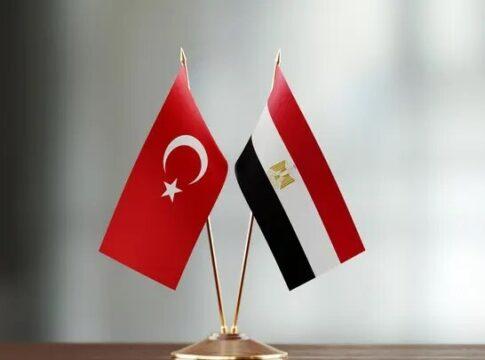
The bond between Egypt and Turkey reaches deep into the shared history of the Eastern Mediterranean — a relationship that long predates modern diplomacy. For centuries, Egyptians and Anatolians exchanged goods, ideas, and traditions along maritime and overland routes that connected the Nile Valley to Anatolia and the Levant. From the time of the Mamluks and Ottomans, Cairo and Istanbul were twin centers of learning and trade, linked by the pulse of the Islamic world and by the currents of the Mediterranean. Egypt remained part of the Ottoman Empire from 1517 to the early 20th century, a period during which the two societies became closely intertwined in administration, education, and commerce. Even after Turkey’s transformation into a republic in 1923, the social and cultural bonds between the two peoples endured, reflected in family heritage, cuisine, architecture, and language.
Formal diplomatic relations between the Arab Republic of Egypt and the Republic of Turkey were established in 1925, marking nearly a century of official engagement. Over time, both countries have navigated phases of political distance and reconciliation, yet their people-to-people and economic ties have remained remarkably resilient. In recent years, renewed diplomatic dialogue has gained momentum. The reopening of embassies, the exchange of high-level visits, and the signing of new cooperation frameworks have signaled the dawn of a more pragmatic and forward-looking phase in bilateral relations — one that prioritizes economic integration, trade expansion, and regional stability.
Today, trade represents one of the strongest anchors of the Egypt–Turkey relationship. According to the United Nations COMTRADE database, bilateral trade reached nearly USD 9 billion in 2024, and both governments have set a target of USD 15 billion annually. Egypt’s exports to Turkey, valued at about USD 3.32 billion, include mineral fuels, fertilizers, plastics, iron and steel, electrical equipment, chemicals, textiles, and cement. Turkish exports to Egypt, meanwhile, reached USD 4.18 billion, consisting primarily of machinery, vehicles, electrical goods, textiles, paper, and metals. Turkish investments in Egypt continue to grow, particularly in manufacturing, textiles, food processing, construction, and energy, with more than 200 Turkish companies operating in Egypt’s industrial cities, employing tens of thousands of Egyptian workers and producing goods for export across Africa and the Middle East.
Looking ahead, both sides see immense potential to expand cooperation beyond traditional trade in goods to encompass services, technology, and joint industrial ventures. Egypt’s strategic geographic position — connecting Africa, the Arab world, and Europe — complements Turkey’s role as a Eurasian production hub. The prospect of joint manufacturing zones, especially within the Suez Canal Economic Zone (SCZone), could allow Turkish manufacturers to leverage Egypt’s access to African markets under the AfCFTA framework, while Egyptian exporters could benefit from Turkish logistical networks and advanced supply chains. Collaboration in renewable energy, particularly solar, wind, and green hydrogen, aligns with both nations’ commitments to sustainability and energy transition. Likewise, transportation, logistics, tourism, higher education, and healthcare services present new frontiers for partnership. Expanding direct flights between Egyptian and Turkish cities, enhancing maritime connectivity, and promoting two-way tourism could further anchor cultural and commercial exchange.
Politically and economically, the convergence between Egypt and Turkey reflects a broader regional shift toward cooperation and pragmatic development. Both nations recognize that their prosperity is interlinked with the stability of the Eastern Mediterranean, the Red Sea, and North Africa. Turkey’s geographic and industrial reach complements Egypt’s demographic and logistical strength, making them natural partners in the emerging multipolar global economy. Together, they represent a powerful bridge connecting Europe, Asia, and Africa, capable of driving cross-regional trade, energy corridors, and digital transformation. In parallel, their dialogue in political forums — from the United Nations to regional organizations — reflects a shared vision for diplomacy based on mutual respect and collective advancement.
As Turkey celebrates its Republic Day, this deepening relationship with Egypt stands as a testament to the strength of history and the promise of renewal. It is a story of two civilizations — each proud of its heritage, each pursuing progress — finding common ground in trade, technology, and peace. The synergy between Cairo and Ankara today is not only an economic alignment but a reflection of something deeper: a partnership driven by shared ambition, regional responsibility, and a belief that prosperity, when built together, can reshape the future of nations.