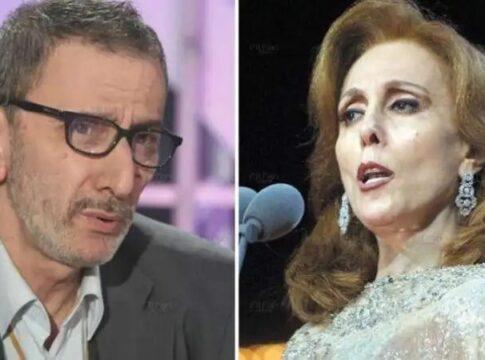
In the heart of Lebanon, a land where the Mediterranean breeze carries stories of ancient civilizations and modern strife, the melodies of Ziad Rahbani have long resonated, echoing both the hopes and heartbreaks of a nation. On a somber Saturday, Lebanon bid farewell to this era-defining composer, playwright, and musician, whose artistry captured the essence of a country grappling with its identity amid persistent turmoil. Rahbani passed away at 69, leaving behind a legacy as complex and profound as the land he called home.
Born into the illustrious Rahbani family, Ziad’s musical journey was almost predetermined. His mother, Fayrouz, is revered as one of the Arab world’s greatest voices and legends, while his father, Assi Rahbani, was a pioneering composer. Yet, Ziad carved his own path, blending traditional Arab sounds with Western jazz and funk, crafting what he once described as “Oriental jazz”—a musical fusion that mirrored Lebanon’s unique cultural tapestry.
For those who endured Lebanon’s civil war from 1975 to 1990, Rahbani’s work became anthems of resilience. His satirical plays and evocative compositions, such as “A Long American Film” and “What About Tomorrow?”, offered a mirror to the country’s societal fractures. As Jad Ghosn, a journalist and filmmaker who chronicled Rahbani’s impact, noted, “He replaced the romantic illusions of a unified Lebanon with a raw portrayal of its fragmented reality.”
Rahbani’s political leanings were as distinctive as his music. Despite his Greek Orthodox Christian roots, he was a staunch Communist and an outspoken advocate for Palestinian rights—stances that often placed him at odds with Lebanon’s political elite. His experiences during the siege of Tal el-Zaatar refugee camp in 1976, where he witnessed atrocities firsthand, deeply influenced his worldview and artistic expression.
“Ziad Rahbani’s music and plays are a testament to the power of art as both a reflection and critique of society,” said Dr. Leila Haddad, a cultural historian at the American University in Lebanon. “He used his platform to challenge the status quo, providing a voice for the marginalized and oppressed.”
Throughout his career, Rahbani’s compositions for his mother marked a significant departure from her earlier works. Albums like “Houdou Nisbi” and “Abu Ali” showcased his innovative blend of quarter tones and Western musical styles, transforming Fayrouz’s sound and broadening her appeal. His music, though influenced by Western greats like Charlie Parker, remained intrinsically Lebanese, embracing the country’s dual identity as an Arab nation with deep ties to Europe.
In his later years, Rahbani’s political alliances shifted, aligning with Hezbollah and expressing support for controversial figures like Syria’s Bashar al-Assad. These positions alienated some fans but underscored a lifelong commitment to his convictions, however polarizing they might be.
As Lebanon continues to navigate its complex political and social landscape, the echoes of Rahbani’s work endure, reminding future generations of the power of art to inspire change. His passing marks the end of a chapter, but his legacy as a voice for justice and a beacon of Lebanon’s cultural richness will resonate for years to come.
In the words of President Joseph Aoun, Rahbani was “a rebellious voice against injustice, an honest mirror for the marginalized.” His music and plays remain a testament to a life’s work dedicated to truth, creativity, and the relentless pursuit of a better tomorrow.