
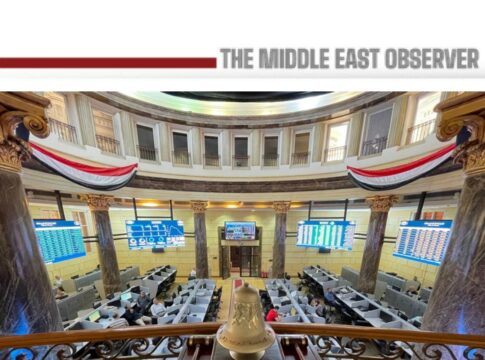
Cairo — Egypt’s benchmark equities index closed the first week of March on a mixed note, with the blue-chip EGX30 posting its steepest weekly decline since June despite a late rebound in the final trading session.
The EGX30 index ended the week at 47,516 points, recovering 2.29% on Thursday after four consecutive sessions of losses, but still finishing the week down about 3.5% overall, according to market data and analyst reports.
Trading in Cairo opened the week under pressure as investor sentiment weakened amid heightened geopolitical tensions across the Middle East. Regional markets reacted to escalating conflict involving Iran and several Gulf states, prompting cautious trading and capital outflows from risk assets.
The Egyptian market was particularly affected by concerns that regional instability could impact key economic drivers such as foreign investment flows, tourism revenues, natural-gas exports, and traffic through the Suez Canal, analysts noted.
As a result, the EGX30 declined for four straight sessions through mid-week, reflecting broad selling across several large-capitalization stocks.
However, equities rebounded sharply in the final trading session of the week, with Commercial International Bank (CIB)—the largest listed lender—rising around 3.7%, providing the main support for the market recovery.
This rebound helped limit the weekly losses for Egypt’s benchmark index and signaled continued investor interest in high-liquidity banking stocks.
While the blue-chip index declined, broader market indices showed relative resilience. In the final session of the week, the EGX70 EWI index for small- and mid-capitalization stocks rose about 1.3%, while the EGX100 EWI advanced roughly 1.2%, reflecting stronger activity outside the large-cap segment.
Market turnover during Thursday’s session reached approximately EGP 6.9 billion, indicating sustained liquidity despite the week’s volatility.
The EGX30, which tracks the most liquid 30 companies listed on the Egyptian Exchange and serves as the main barometer of market performance, remains significantly higher on a year-on-year basis despite the recent pullback.
Analysts expect investor sentiment in the coming weeks to remain sensitive to geopolitical developments across the region, as well as macroeconomic indicators and new market initiatives—including the launch of EGX30 derivatives trading aimed at expanding Egypt’s capital-market instruments.
Overall, the Egyptian market closed the week lower but showed signs of stabilization, with a late rebound highlighting continued investor confidence in leading banking and large-cap stocks.
