
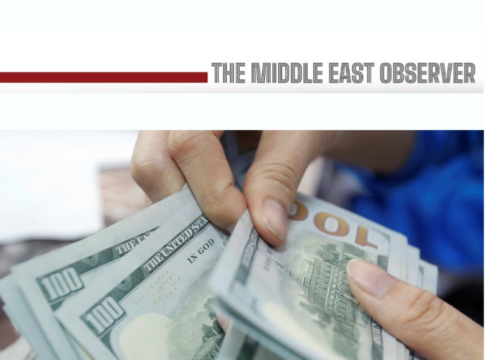
Remittances from Egyptians working abroad rose sharply by 42.8% year-on-year to $33.9 billion between January and October 2025, compared with $23.7 billion in the same period a year earlier, according to data released on Sunday by the Central Bank of Egypt.
On a monthly basis, remittance inflows in October 2025 increased by 26.2% to $3.7 billion, up from $2.9 billion in October 2024. For the full fiscal year 2024–2025, remittances jumped by 66.2% to reach $36.5 billion, compared with around $21.9 billion in fiscal year 2023–2024.
The central bank said the rise in remittances supports Egypt’s foreign currency reserves and contributes to strengthening overall economic stability, underscoring the continued role of Egyptians abroad as a key pillar of support for the national economy.
Egypt’s foreign exchange reserves rose to $50.215 billion at the end of November 2025, up from $50.071 billion at the end of October, an increase of $144 million. The value of gold holdings included in the reserves climbed to $17.252 billion by the end of November, compared with $16.545 billion a month earlier, reflecting a $798 million increase.
Commenting on the figures, Mostafa Shafie, head of research at Arabia Online Securities, said the surge in remittances was not unexpected, coming after the Egyptian economy moved past a period of intense pressure marked by dollar shortages and exchange-rate volatility. He noted that restoring monetary stability, alongside the adoption of a more flexible exchange rate regime, helped rebuild confidence in the banking sector as the main and legitimate channel for receiving remittances.
Shafie added that these developments have encouraged Egyptians abroad to route their transfers through official banking channels, boosting inflows. He said remittances could continue to trend positively in the coming period if monetary stability persists and the parallel market remains absent.
He also pointed out that remittances are recorded under the current account of the balance of payments, reflecting Egypt’s financial relations with the rest of the world. Sustained growth in these inflows could improve the banking sector’s net foreign assets, alongside other key sources of foreign currency such as Suez Canal revenues, tourism receipts, exports, and foreign direct investment. Shafie cautioned, however, that the impact of rising inflows on the exchange rate should be assessed in light of Egypt’s external obligations falling due.