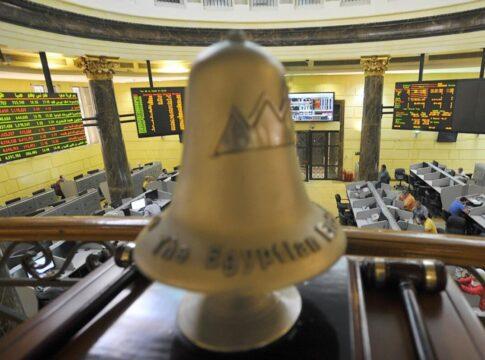
Egypt’s stock market ended last week on a positive note, with strong foreign inflows lifting the benchmark indices despite muted domestic sentiment. The Egyptian Exchange (EGX) closed Thursday’s session in the green, as the EGX30 index inched up 0.36% to 36,900.7 points, while the Shariah-compliant EGX33 gained 0.13% to 3,679.39 points. The EGX35-LV, which tracks low-volatility blue chips, outperformed with a 0.64% rise to 4,025.26 points. Meanwhile, the SMEs index (EGX70) added 0.14% to 11,034.92, and the EGX100 advanced 0.07% to 14,628.43, bringing total market capitalization to EGP 2.6 trillion.
Foreign appetite remained the session’s defining force. Arab and non-Arab investors were net buyers, recording inflows of EGP 1.62 billion and EGP 4.08 billion respectively. Conversely, Egyptian investors were net sellers, offloading around EGP 5.7 billion worth of shares. Analysts say this divergence underscores how Egypt’s market growth is reliant on foreign capital at a time of cautious local sentiment. “The market’s resilience owes much to external demand,” commented Nadia Kamel, senior equity strategist at Cairo Capital. “While local investors are still gauging the macro outlook, foreign institutions continue to price in reform momentum and relative currency stability.”
Top performers of the week included Macro Group Pharmaceuticals, whose shares jumped 20% to EGP 3.24, reflecting renewed confidence in Egypt’s healthcare and pharmaceutical sector. A Capital Holding surged 12.5% to EGP 4.95, while consumer goods giant Edita Food Industries climbed 9.5% to EGP 21.90 on solid earnings expectations and export expansion plans. On the downside, Misr Oils and Soap fell 8.08%, International Agricultural Products dropped 7.21%, and El Obour Real Estate Investment slipped 4.51%, signaling profit-taking across traditional industries.
The EGX’s steady upward momentum mirrors a broader recovery in investor confidence, bolstered by macroeconomic stabilization and renewed reform efforts. The EGX30 has gained nearly 24% year-to-date, outperforming several regional peers. This rally comes amid government efforts to attract Egyptian expatriates and institutional investors through digital trading initiatives and more inclusive index structures, such as the EGX33 (Shariah) and EGX35-LV. In recent remarks, EGX Chairman Ahmed El-Sheikh emphasized the exchange’s digital strategy, including the upcoming “EGX Gate” platform designed to facilitate real-time investor engagement and access for the Egyptian diaspora.
Market observers believe foreign participation will remain a key pillar of the EGX’s performance through year-end, provided that global risk appetite and Egypt’s monetary policy remain supportive.
Looking ahead, analysts are monitoring three pivotal factors: the sustainability of foreign inflows, the impact of inflation and currency stability on market sentiment, and the degree of retail participation in upcoming months. While the short-term outlook remains constructive, the long-term health of Egypt’s capital market depends on broadening participation and enhancing transparency across listed sectors.
In sum, the EGX’s gains on October 2 reaffirm Egypt’s standing as one of the more resilient emerging markets in the region. Yet as foreign investors continue to drive momentum, the next phase of the rally will depend on whether local investors, institutions, and policy frameworks can collectively sustain the confidence now returning to Cairo’s financial landscape.