
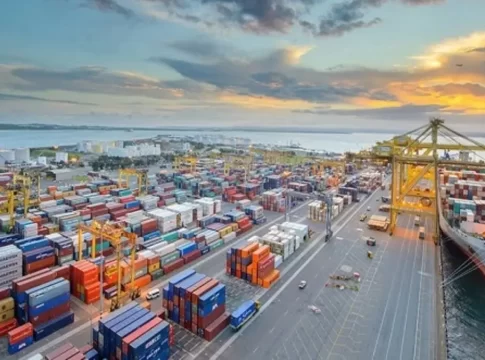
Egypt’s non-oil trade deficit has reached its lowest point in six years, falling to $14.3 billion in the first half of 2025. This represents an impressive 18% decrease from the previous year, according to a report by Bloomberg. The narrowing gap is primarily attributed to a robust increase in goods exports, which surged by 22% to $24.5 billion, a promising sign of economic resilience and strategic progress.
The building materials and metals sector emerged as a key driver of this export growth, contributing approximately 30% or $7.5 billion of the total goods exports. Other significant contributors included chemicals and fertilizers ($4.5 billion), food industries ($3.3 billion), engineering products ($3.1 billion), and agricultural exports ($2.9 billion). Ready-made garments also made a notable impact, accounting for $1.6 billion of the exports.
Economist Dr. Layla Hassan from the Cairo Economic Institute noted, “The diversification of Egypt’s export portfolio is a strategic move that is beginning to show tangible results. Such growth in non-oil sectors is crucial for sustainable economic development.”
The United Arab Emirates has solidified its position as Egypt’s top export destination, with exports soaring to $3.7 billion, marking a 163% year-over-year increase. Other major trade partners included Turkey, Saudi Arabia, the United States, and Italy. This export expansion has been vital in mitigating the impact of declining Suez Canal revenues, which have been affected by geopolitical tensions in the Red Sea region.
In response to these promising trends, the Egyptian government has set ambitious goals to boost total exports to $145 billion by 2030, with $118 billion anticipated from industrial exports. Minister of Investment and Foreign Trade Hassan El-Khatib acknowledged the need for continued growth, pointing out that current exports represent just 10% of GDP, one of the lowest ratios globally. The government’s target is to elevate this to between 20% and 30%.
To support this vision, Egypt has introduced a new export support framework linking incentives to annual increases in local content, with a minimum threshold of 35% local input required for eligibility. Furthermore, the export support budget has been nearly doubled to EGP 45 billion ($975 million) for the fiscal year 2025–2026.