Egypt is preparing to list up to 40% of the Jabal El-Zeit Wind Power Plant on the Egyptian Exchange (EGX) before the end of this year, even as five global investment companies begin due diligence for potential acquisition bids — underscoring the project’s strategic value and growing investor appetite for Egyptian renewable assets.
According to government officials quoted by Asharq and Al-Borsa, the companies conducting technical and financial reviews include Saudi Arabia’s ACWA Power, the UK’s Actis, the UAE’s Alcazar Energy, as well as a Malaysian and an unnamed European firm. Bidders have until the end of October to submit formal offers, though sources say Cairo is now leaning toward a partial public listing rather than a full strategic sale.
This dual-track approach reflects Egypt’s evolving privatization strategy — balancing the desire to attract foreign capital with a commitment to retain national ownership in vital infrastructure. Finance Minister Ahmed Kouchok confirmed that the government will relaunch its state-owned offerings program before the end of 2025, beginning with renewable energy assets like Jabal El-Zeit and the Siemens Beni Suef Power Plant, followed by three to four additional exits by June 2026.
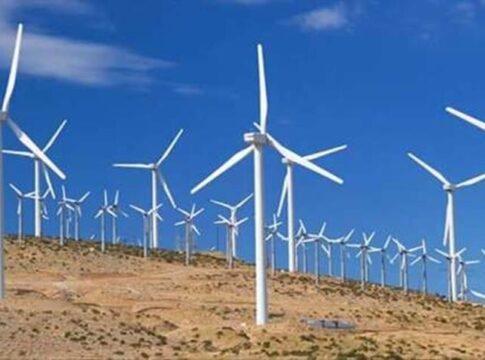
The Jabal El-Zeit wind complex, situated on the Red Sea coast near Ras Gharib, boasts a total capacity of 580 megawatts, spread across three sub-projects: Jabal El-Zeit 1 (240 MW), Jabal El-Zeit 2 (220 MW), and Jabal El-Zeit 3 (120 MW) — developed in cooperation with the Spanish government. Together, they form one of the largest wind farms in the Middle East, critical to Egypt’s drive to raise the share of renewables in its national energy mix to 42% by 2030.
Officials involved in the process said the listing plan follows the collapse of talks with Actis, which earlier offered $300–340 million for a full acquisition. Disagreements over valuation and terms led Cairo to pivot toward a public share offering — a move described by one senior official as “a more transparent mechanism that ensures broader investor participation and a fair market price.”
Egypt’s privatization roadmap aims to reduce the state’s footprint and create room for the private sector, which currently accounts for roughly 30% of the economy. According to government data reviewed by Asharq, Egypt owns around 561 companies across 18 sectors, distributed among 45 state entities and 16 governorates. The government has so far raised $5.8 billion from its offerings program since mid-2022 — about 47% of its $12.2 billion target by mid-2025.
Market analysts say the decision to push Jabal El-Zeit toward a stock listing, while keeping foreign bidders engaged, demonstrates a hybrid model of privatization that could become a blueprint for future energy projects. “Cairo is striking a balance between sovereign control and capital-market discipline,” said energy economist Dr. Leila Mansour, noting that the move “signals Egypt’s confidence in positioning renewable energy as a core pillar of its financial and environmental strategy.”
If executed successfully, the Jabal El-Zeit IPO could mark a turning point for Egypt’s energy market — transforming a flagship wind farm into a publicly traded clean-energy asset and reinforcing Cairo’s position as a regional hub for sustainable investment