
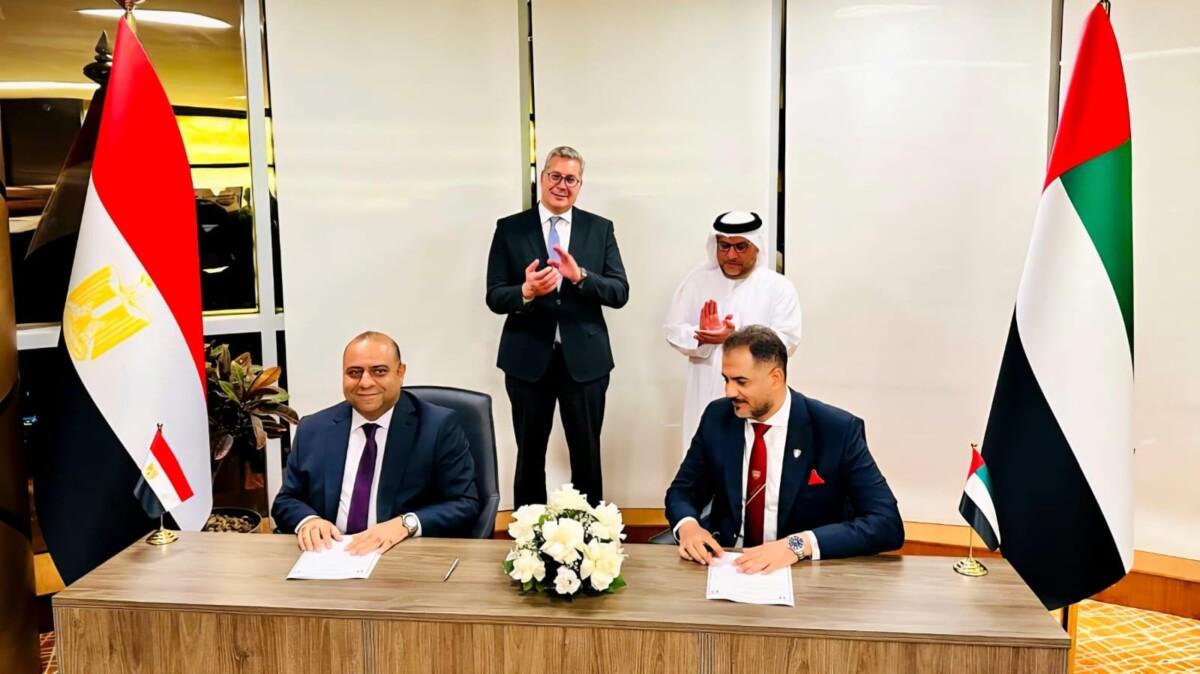
In a significant boost to regional energy cooperation, Egypt and the Emirate of Fujairah have signed three major agreements aimed at transforming Egypt’s El-Hamra Port in New Alamein into a key hub for crude oil trading, storage, and logistics on the Mediterranean. The accords were signed in Fujairah in the presence of Egypt’s Petroleum Minister Karim Badawi and Mohammed Saeed Al Dhanhani, Director of the Fujairah Amiri Diwan, underscoring the growing economic alignment between Cairo and Abu Dhabi.
Under the first deal, the two sides will establish an Egyptian joint-stock company to develop a logistics zone for storage and trading of crude and refined products at Al-Alamein. The second agreement focuses on expanding El-Hamra Port, operated by the Western Desert Petroleum Company (WEPCO), into a regional crude hub through collaboration with the Fujairah Oil and Gas Corporation, adopting advanced technologies and international standards.
The third deal involves a commercial contract to supply petroleum products directly to the Egyptian General Petroleum Corporation (EGPC), strengthening Egypt’s energy security and long-term partnership with the UAE.
Minister Badawi said the agreements would enhance Egypt’s role as a regional energy gateway, leveraging its infrastructure, geographic position, and partnership with Fujairah—a global oil trading hub. Al-Dhanhani reaffirmed the UAE’s commitment to long-term investment in Egypt’s energy market, reflecting the two countries’ shared vision for regional integration.
Located 120 km west of Alexandria, El-Hamra Port handled about 74 million barrels in FY 2024/25. Its expansion is central to Egypt’s plan to attract foreign investment and maximize its infrastructure’s value. The Ministry of Petroleum recently reported a $3.6 billion drop in the import bill, driven by higher gas output and debt settlements, while 64 new exploration opportunities have been launched to raise production to 6.6 bcf/d by 2027.
Energy analysts view the Fujairah agreements as a strategic step toward integrating Egypt into Gulf energy flows, potentially turning the country into a Mediterranean re-export hub.