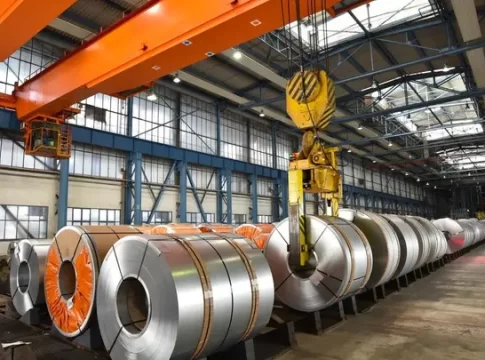
Egypt has moved decisively to shield its domestic steel industry. In September 2025, the Ministry of Trade and Industry imposed provisional safeguard tariffs of up to 16.2% on billets and 13.6% on hot-rolled flat steel, with minimum duty floors per ton. The measures, effective for 200 days, cover hot-rolled and cold-rolled steel, galvanised and colour-coated sheets, and billets. Authorities argued the duties were necessary after a surge in low-priced imports caused “serious injury” to domestic producers.
These actions are legally framed under the World Trade Organization’s (WTO) safeguard rules, which allow temporary protection while a full investigation—running up to 12 months—assesses the case for definitive measures. The official rationale: provide breathing space for Egyptian producers, stabilize domestic supply, and prevent price undercutting that threatens employment in a strategic sector.
The timing reflects a confluence of external and domestic pressures. Globally, the steel sector is grappling with record overcapacity. The OECD projects excess capacity could swell to over 720 million tonnes by 2027—more than the entire OECD output. This glut has driven aggressive exports, often at prices alleged to be below cost, leaving many governments scrambling to shield local mills.
Domestically, Egypt is battling inflationary pressures. Steel is a cornerstone input for construction, housing, and infrastructure—sectors central to growth and job creation. Allowing imports to destabilize local markets could not only harm Egyptian producers but also magnify inflation if supply dries up. Hence, Cairo is walking a tightrope: tariffs protect jobs and investment in steel but risk raising local prices for downstream industries.
Egypt’s protective turn coincides with mounting legal struggles overseas. In the United States, the Department of Commerce has launched anti-dumping and countervailing duty (AD/CVD) investigations into Egyptian rebar. Dumping margins alleged are over 110%, with subsidy rates also flagged. If confirmed, Egyptian exporters could face steep duties in 2026, curtailing market access and earnings. In the European Union, the Commission has already imposed final anti-dumping duties on hot-rolled coil (HRC) from Egypt. The largest producer, Ezz Steel, received an 11.7% duty, while others were hit with rates as high as 30.4%. These measures will significantly affect Egyptian steel’s competitiveness in Europe, one of its key markets.
Several economies have pursued similar strategies in the past. In 2002, the United States imposed temporary tariffs on steel to shield domestic mills, but the move raised costs for downstream industries and was ultimately struck down by the WTO. The European Union has relied on anti-dumping duties but applies a “public interest” test, weighing the impact on consumers, jobs and inflation, and calibrates duties to reward compliant producers while penalising others. Japan and South Korea, by contrast, invested heavily in technology and productivity, reducing reliance on tariffs while maintaining export strength. Their approach has been forward-looking, with a shift towards green steel and value-added products. The broader lesson is that while short-term protection can provide relief, long-term competitiveness rests on modernisation, efficiency and strategic positioning in global markets.
Egypt’s new steel tariffs of 16.2% on billets and 13.6% on hot-rolled flat steel must be part of a wider plan. The country should use tariff-rate quotas to keep imports affordable, introduce public interest tests to protect jobs and consumers, and apply differentiated, time-bound duties that encourage efficiency. The breathing space should be used to modernise plants, cut costs, and invest in green steel, while active diplomacy with the U.S. and Europe helps safeguard exports. Poorly managed, tariffs risk higher prices, inflation, and job losses; managed wisely, they can stabilise supply, protect employment, and strengthen Egypt’s competitiveness through diversification and value-added steel.
Egypt’s steel tariffs are not mere protectionist reflexes but a response to global overcapacity, rising inflation, and mounting legal disputes abroad. The challenge, however, extends beyond shielding mills: Cairo must strike a balance between protection and openness, price stability and competitiveness, and short-term relief and long-term modernization. If Egypt tailors its policy intelligently—making it temporary, transparent, targeted, and linked to productivity gains—it can safeguard jobs and preserve market share; if not, it risks falling into a cycle of inflation, inefficiency, and trade battles. At this strategic crossroads, Egypt’s success will depend less on tariffs themselves and more on how effectively they are used to build a truly competitive and sustainable steel industry.