Egypt’s Ministry of Petroleum and Mineral Resources announced the signing of two historic Memoranda of Understanding (MoUs) with the UAE’s International Resources Holding (IRH), cementing deeper cooperation in the petroleum and mining sectors at a time when both countries are seeking to strengthen energy security and diversify economic growth.
The first MoU was signed between the Egyptian Mineral Resources Authority (EMRA) and IRH. It aims to provide technical support for Egypt’s national airborne survey project, which maps the country’s mineral wealth potential. The deal also includes the creation of a modern digital platform that will streamline access to survey results, boosting efficiency and transparency for both domestic and international investors.
Industry observers see this as a significant step forward. “Egypt’s mining sector has long been underexplored despite its geological potential,” noted Dr. Hossam Allam, a mining policy analyst at the Arab African Mining Conference. “Introducing advanced airborne survey techniques coupled with digital platforms positions Egypt as a serious player in attracting global mining investments.”
The second MoU was signed between the Egyptian General Petroleum Corporation (EGPC) and IRH, focusing on commercial financing for petroleum transactions—covering crude oil, LNG, and refined products. Crucially, the agreement seeks to lower financing costs by securing competitive funding rates from international markets, potentially reducing the fiscal burden on Egypt’s petroleum imports and exports.
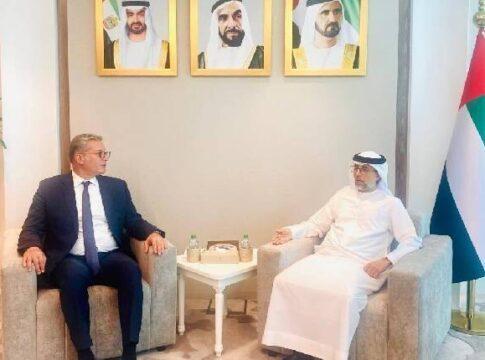
The agreement was formalized by Eng. Salah Abdel Karim, CEO of EGPC, and IRH’s Chief Executive Officer, in the presence of Karim Badawi, Egypt’s Minister of Petroleum and Mineral Resources, and Mariam bint Mohammed Almheiri, Head of International Affairs at the UAE Presidential Court and Chair of IRH subsidiary Point Zero.
These agreements follow high-level talks held in Cairo last month and align with Egypt’s strategy to ensure energy supply security while expanding the mining sector’s contribution to GDP. The moves come at a critical juncture: Egypt’s mining industry currently contributes less than 1% to GDP, far below the government’s 2030 target of 5%, according to official figures.
On the petroleum front, Egypt faces rising import costs for crude and LNG, compounded by currency pressures. Competitive financing facilities, as outlined in the MoU, could free up state resources and bolster the EGPC’s negotiating position in global markets.