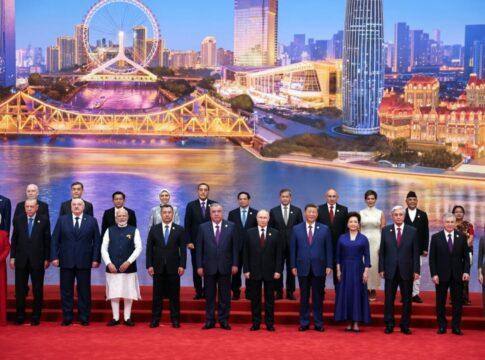
Egypt emerged from the Shanghai Cooperation Organisation Plus (SCO+) summit in Tianjin with a series of high-profile agreements across energy, industry, and healthcare, underscoring its strategy to attract foreign investment and expand international partnerships.
Prime Minister Mostafa Madbouly announced that China Energy Engineering Corporation (CEEC) will invest USD 1 billion over the next five years, focusing on renewable power, seawater desalination, and energy storage, while also moving its regional headquarters to Cairo. This aligns with Egypt’s target to produce 10 million cubic meters of desalinated water daily within five years, and to raise renewable energy’s share of the power mix to 42% by 2030, with plans to export electricity to Europe. In parallel, Chinese energy giant TBEA pledged to expand its USD 300 million investments in Egypt and support the localization of solar and wind power components.
Talks with TEDA Holding, the developer of the China-Egypt TEDA Suez Economic and Trade Cooperation Zone, led to an agreement for new land allocation to attract investments in electric vehicles, battery production, renewable energy, and desalination. TEDA has already drawn 200 firms, injected USD 3 billion, and created more than 10,000 jobs in the zone. Meanwhile, China National Chemical Engineering Company (CNCEC) confirmed its interest in petrochemical and fertiliser projects, with plans to send a delegation to Egypt in October.
Beyond China, Egypt deepened ties with Russia through agreements in healthcare and medical tourism. The two sides will launch family medicine clinics and mobile “Nile clinics” to serve Russian tourists, who number over 1.5 million annually. Plans also include establishing an integrated cancer diagnosis and radiotherapy center under Egypt’s Universal Health Insurance program, alongside cooperation on nuclear medicine and discounted medical packages for Russian nationals. Broader cooperation is also advancing through the Russian Industrial Zone in the Suez Canal Economic Zone, expected to attract USD 7 billion in investment and 35,000 jobs, as well as Russia’s continued financing of Egypt’s USD 25 billion Dabaa nuclear power plant.
Taken together, these agreements mark a significant step in Egypt’s pursuit of economic diversification and technology transfer. By anchoring investments in clean energy, electric mobility, industrial expansion, and advanced healthcare, Cairo is positioning itself as a regional hub while strengthening its strategic partnerships with both Beijing and Moscow.