
Marking a significant expansion of Indian industry into North Africa, two new ferroalloy manufacturing plants are set to rise in Egypt’s East Ismailia Zone within the Suez Canal Economic Zone (SCZone). The projects, with a combined value of USD 75 million, are poised to bolster Egypt’s steel supply chain and deepen trade ties between the two nations.
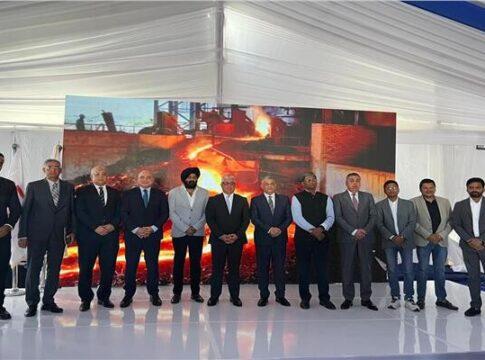
The initiative was officially launched at a foundation stone ceremony attended by Ambassador Suresh Reddy of India, Major General Akram Galal, Governor of Ismailia, and Engineer Walid Gamal El-Din, Chairman of the SCZone Authority, alongside senior executives from Willow Ferro Alloys India, the company behind the investment. The plants will be the first Indian industrial footprint in East Ismailia’s Technology Valley—a growing hub for high-value manufacturing.
Valued at USD 75 million, these facilities represent the first Indian industrial investments in East Ismailia’s Technology Valley in Sinai. They signal deepening bilateral economic cooperation and align with Egypt’s strategic push to localize production of essential industrial inputs.
Willow Ferro Alloys India—a global leader with five operational furnaces in India, two in Zambia, and logistics operations in Tanzania—will execute the Egyptian project in three phases. Initial production will focus on silicomanganese and ferrosilicon, crucial alloying elements in high-grade steelmaking.
Currently imported by Egypt, these materials’ local production is expected to save the country around USD 75 million annually in import costs, while creating 300 direct jobs and more than 1,000 indirect jobs.
SCZone Chairman Walid Gamal El-Din noted that the Technology Valley is fast becoming an industrial cornerstone for the region, offering proximity to global trade routes, tax incentives, and modern logistics facilities. Governor Galal emphasized that this investment not only boosts local employment but also strengthens Egypt’s position as a manufacturing hub for Africa, the Middle East, and beyond.
Ambassador Reddy described the project as “a symbol of the strength and trust in India–Egypt relations,” adding that bilateral trade and investment are now on track to triple from $4.2 billion in 2024 to $12 billion in five years.
“This is more than an industrial investment—it’s a supply chain sovereignty play,” says Dr. Laila Kassem, Cairo-based industrial economist. “By controlling key steelmaking inputs domestically, Egypt reduces vulnerability to global market swings and currency fluctuations. For India, it secures a stable production base in a geopolitically strategic trade corridor.”
This investment comes amid a surge of foreign industrial interest in the SCZone, with multiple green hydrogen and renewable energy MoUs signed in recent months, alongside European, Chinese, and Gulf-backed manufacturing projects. Industry observers say India’s entry into this zone positions it competitively in the Mediterranean–Red Sea–Africa trade nexus.
The ferroalloy plants also align with Egypt’s Vision 2030 industrialization plan, which emphasizes import substitution, value-added exports, and integration into global manufacturing networks.