
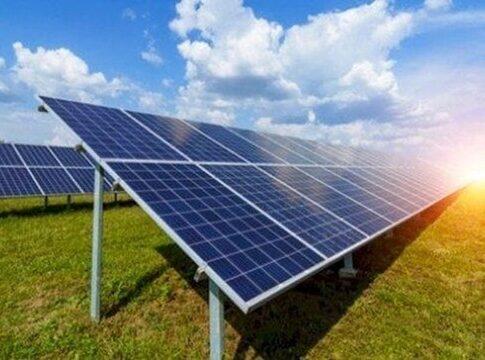
The global photovoltaic solar energy market has entered a historic expansion phase, surging to approximately 447 gigawatts in 2023—an 87% year-on-year increase. According to the International Energy Agency, global demand is set to climb further, reaching between 860 and 900 gigawatts by 2035 and 2050. This growth trajectory is being powered by China’s strategic $50 billion investment in solar technology manufacturing, which has led to a 90% reduction in solar-based electricity system costs since 2010.
While China’s dominance—commanding over 80% of the global market share and hosting the top ten solar equipment suppliers—remains formidable, shifting trade dynamics and surging European demand create a compelling entry point for competitive new players. The EU, forecast to import clean technologies worth 35% of its total import bill by 2035 (up from less than 10% in 2023), represents an export market worth billions annually for producers able to meet its quality and sustainability standards.
Egypt has the rare advantage of both resource abundance and strategic geography. The country possesses vast quartz reserves, critical for producing solar-grade silicon, in regions such as Umm Halig, Marsa Alam, and Wadi Al-Gezira. In 2023, Egypt commissioned the Ain Sokhna quartz production complex—Africa’s first integrated facility of its kind—and launched the New Alamein silicon production complex, which will include a polysilicon plant for solar cell manufacturing. These projects provide a ready-made upstream supply base for solar panel manufacturing, reducing import dependence and enabling cost-competitive production.
From an economic perspective, entering this market offers three key profit drivers:
- Import Substitution Savings – Egypt’s solar energy expansion currently relies on imported panels, exposing the market to currency volatility. Local manufacturing could save hundreds of millions of dollars annually in foreign currency outflows.
- Export Revenue Potential – With Europe projected to remain the world’s largest importer until at least 2035, even a modest penetration of EU markets could translate into annual export revenues in the range of $500 million to $1 billion, depending on scale and pricing strategy.
- Economies of Scale & ROI – Following China’s model, scaling production to supply both domestic and foreign markets could reduce unit costs by 30–40% over the first five years. Initial investment returns could be achieved in 6–8 years for a facility producing at competitive global capacity.
Beyond direct sales, a localized solar manufacturing industry would generate ripple effects across logistics, electronics, glass production, and advanced materials sectors. High-skilled jobs in engineering, plant management, and R&D would strengthen Egypt’s labor market, while technology transfer partnerships with global solar leaders could position Egypt as a regional innovation hub.
However, the path to profitability hinges on a well-structured investment framework. Government policy must support initial capital-intensive phases with targeted incentives such as tax breaks, subsidized industrial land, and export financing schemes. Public-private partnerships could mobilize foreign direct investment while sharing early-stage risk. A focus on building an integrated value chain—from quartz extraction to final panel assembly—would secure cost control and market competitiveness.
With global demand surging, production costs falling, and Europe seeking diversified suppliers, Egypt stands at a pivotal crossroads. A calculated move into solar panel manufacturing could transform an abundant natural resource into a high-value export commodity, delivering double-digit returns for investors while advancing national energy independence and sustainability goals.