
Egypt has approved the participation of two of its leading petroleum engineering firms, Petrojet and ENPPI, in financing and implementing a new phosphoric acid production complex in the Abu Tartur Plateau of the New Valley Governorate.
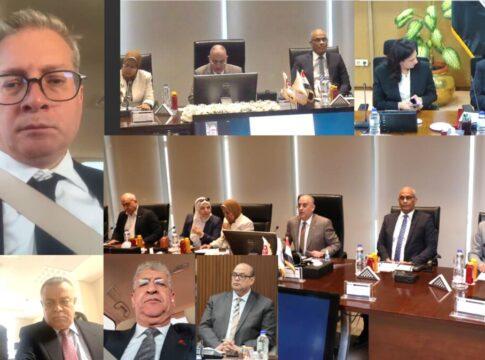
The decision came during a joint extraordinary general assembly meeting of the two companies, held in coordination with the Minister of Petroleum and Mineral Resources, Eng. Karim Badawi, who joined remotely via video conference. The project, which will initially produce 250,000 tons of phosphoric acid annually, marks a turning point in Egypt’s ambition to extract greater value from its abundant phosphate reserves.
“This isn’t just another industrial facility. This is a national milestone,” said Minister Badawi. “For too long, we’ve exported phosphate in raw form, leaving behind significant economic value. Today, we’re laying the foundation for Egypt to become a regional hub for advanced mining industries.”
The plant is part of a broader strategy spearheaded by the Ministry of Petroleum and Mineral Resources to increase the mining sector’s contribution to Egypt’s GDP from under 1% to as much as 6% over the coming years. Officials suggest the Abu Tartur project represents one of the strongest realizations of this vision to date.
The facility will convert raw phosphate ore into high-demand phosphoric acid, a critical compound in fertilizer production, metal treatment, and food additives. This forward integration will not only multiply revenue from Egypt’s natural resources but also reduce reliance on imported chemicals—improving the country’s balance of trade.
Experts say this vertical shift from raw material exporter to value-added processor echoes the strategic reforms seen in countries like Morocco, which has successfully used its phosphate industry to secure major global trade deals and investments.
“The Abu Tartur complex has the potential to be a game-changer for Egypt, similar to how OCP transformed Morocco’s global phosphate positioning,” said Dr. Amr Mahmoud, a mining economist at Cairo University. “If executed efficiently, the returns will extend far beyond direct revenue, including job creation, technology transfer, and regional trade influence.”
In tandem with this industrial leap, ENPPI also secured approval to join the shareholder structure of the Egyptian Sustainable Aviation Fuel Company (ESAF), signaling the state’s increasing focus on green energy solutions.
The initiative aims to reduce the carbon footprint of Egypt’s growing aviation sector and align with global emission reduction targets. This diversification into sustainable fuel underlines the Ministry’s dual-track approach—modernizing heavy industry while investing in cleaner, future-ready technologies.
The project enjoys top-level governmental backing, with attendees of the general assemblies including Eng. Salah Abdel Karim (CEO, EGPC), Eng. Ibrahim Mekki (Chairman, ECHEM), and Dr. Khaled El Badry (Undersecretary for Projects). Together, they endorsed the signed shareholder framework agreements and implementation contracts.
If construction and operations proceed on schedule, the first phase is expected to begin output by the end of the implementation window, generating strong momentum for Egypt’s economic diversification agenda.
“This is just the beginning,” Minister Badawi concluded. “We’re not only building a plant; we’re building a new industrial Egypt—one that processes its own minerals, fuels its own jets sustainably, and leads the region in value-added exports.”