
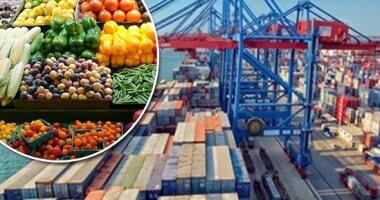
Egypt’s agricultural exports have soared, reaching 5.2 million tons in the first half of this year. Citrus and potato crops spearheaded this growth, underscoring their vital role as Egypt’s top export commodities due to their exceptional quality.
Citrus fruits, a staple of Egyptian exports, topped the list at approximately 1.8 million tons, with potatoes following at 1.2 million tons. This significant increase highlights their global appeal and reflects Egypt’s commitment to maintaining high standards of quality and food safety, which is pivotal for accessing new markets and reinforcing international confidence in Egyptian produce.
Notably, Egypt’s fresh onion exports reached 168,000 tons, while fresh and dried beans amounted to 136,000 tons. Grapes, fresh strawberries, fresh garlic, fresh tomatoes, guava, and pomegranates are also among Egypt’s key agricultural offerings, showcasing the diversity and richness of its produce.
Experts attribute these achievements to the collaborative efforts of farmers, producers, and exporters, whose adherence to high-quality production and agricultural best practices, coupled with rigorous oversight by agricultural engineers and researchers, have been instrumental. The Egyptian Agricultural Quarantine, alongside the Ministry’s laboratories and foreign agricultural relations unit, plays a crucial role in facilitating this export growth by ensuring that products meet international standards.
Dr. Amina El-Masry, an agricultural economist, emphasizes the strategic importance of these exports. “Egypt’s agricultural sector is not just a backbone of the economy but a pivotal player in our comprehensive development plans,” she said. “By boosting export competitiveness, we are opening doors to new markets and economic opportunities.”
Furthermore, Egypt’s burgeoning blueberry industry is gaining traction. FreshPlaza reports that the nation has transitioned from a peripheral player to a serious contender, with initiatives by Spanish and Dutch firms using proprietary genetics. An American company is conducting trials near Alexandria, indicating potential for significant expansion. This aligns with Egypt’s strategic vision to diversify its agricultural portfolio and capitalize on lucrative opportunities.
The International Blueberry Organization (IBO) noted 80 hectares dedicated to Egyptian blueberries in 2022, though figures are contested. These projects, primarily between Cairo and Alexandria, anticipate peak yields aligning with Morocco’s season, benefitting from similar latitudinal advantages. Despite geographical challenges, Egypt’s superior water resources and labor availability provide distinct competitive edges.
The primary export market for Egyptian blueberries is the UK, with shipments escalating from 43 to 149 tons in a recent period. This growth mirrors Europe’s demand for year-round quality supply, challenging Egyptian producers to enhance infrastructure and meet evolving market dynamics.
As Egypt continues to refine its agricultural export strategies, the nation is poised to further strengthen its global trade presence, fostering economic growth and stability for future generations.