
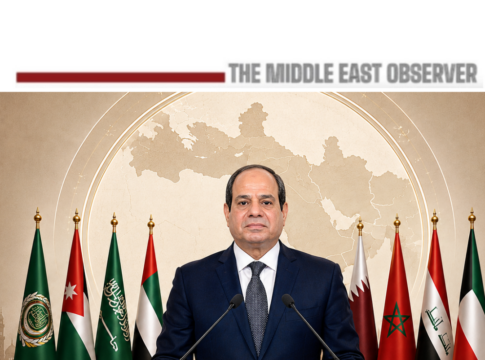
President Abdel Fattah el-Sisi joined US President Donald Trump and several Arab and regional leaders in a high-level telephone call aimed at advancing diplomatic efforts to end the conflict involving Iran and prevent further destabilisation across the Middle East.
According to the Egyptian Presidency, the call included Abdullah II, Hamad bin Isa Al Khalifa, Mohamed bin Zayed Al Nahyan, Recep Tayyip Erdoğan, Tamim bin Hamad Al Thani, Mohammed bin Salman, and Asim Munir. Officials said participating leaders stressed the importance of sustaining negotiations and preventing renewed escalation across the region.
Egypt stated that President Sisi emphasised the need to utilise the current diplomatic window to reach a comprehensive negotiated settlement between Washington and Tehran, reiterating Cairo’s readiness to support mediation efforts in coordination with regional partners.
The diplomatic coordination comes amid mounting concerns over the economic and security consequences of prolonged instability surrounding Iran and the Strait of Hormuz, one of the world’s most critical maritime energy corridors. Disruptions to maritime traffic following the conflict triggered sharp volatility in global oil prices, renewed inflation concerns, and growing fears over supply-chain disruptions affecting Asian, European, and Middle Eastern markets.
Recent statements from Washington suggest diplomatic momentum may be building despite continuing tensions. Trump stated this week that negotiations regarding the reopening of Hormuz and a broader settlement framework had made substantial progress, although final arrangements remain under discussion. Iranian officials, however, have continued signalling that Tehran will not compromise on what it describes as core sovereign and security interests, underlining the fragile nature of ongoing negotiations.
Regional diplomacy has simultaneously accelerated. Turkish officials confirmed that President Erdoğan discussed diplomatic solutions and ceasefire efforts with Trump, while Qatar intensified consultations regarding regional de-escalation, maritime security, and energy stability. Pakistan has also emerged as an increasingly active intermediary, maintaining communication channels with both Tehran and Washington as part of broader mediation efforts.
Analysts note that the unusually broad participation in the call reflects growing recognition among regional powers that prolonged confrontation could carry substantial long-term consequences extending beyond military considerations into energy markets, tourism flows, logistics networks, trade routes, and investment stability across the Middle East.
The crisis has additionally highlighted the increasing intersection between geopolitics and economic security. Gulf energy exporters remain heavily exposed to maritime risks around Hormuz, while countries such as Egypt face indirect exposure through tourism revenues, Suez Canal-linked shipping activity, imported energy costs, and broader investor sentiment toward emerging markets in the region.
As The Middle East Observer notes, the significance of the diplomatic coordination lies not only in efforts to prevent immediate escalation, but also in the emergence of a broader regional consensus favouring containment, negotiated settlements, and economic stability over prolonged confrontation. The coming period will likely determine whether current diplomacy can evolve into a sustainable framework capable of reducing tensions while preserving regional trade, energy security, and strategic balance across the Middle East.
